You’ve found a cryptocurrency project promising revolutionary technology and massive returns. The website looks professional, the community seems enthusiastic, and the whitepaper uses impressive technical language. Before you invest a single dollar, you need to answer one critical question: How do you identify legitimate crypto projects versus elaborate scams designed to steal your money?
Here’s the uncomfortable truth: Americans lost over $9.3 billion to cryptocurrency scams in 2024 alone, that marks a 66% increase from the previous year. Most victims believed they had done proper research. They checked the website, read the whitepaper, and joined the Telegram group. What they didn’t do was systematic due diligence using proven verification methods.
After years of educating investors and analyzing hundreds of projects – both successful and fraudulent – we’ve developed an 8-point checklist that separates legitimate cryptocurrency projects from scams, incompetent teams, and projects destined to fail. This isn’t about finding the next 100x opportunity. Instead, it’s about protecting your capital by identifying red flags before they cost you everything.
This guide walks you through each verification step with specific tools, real examples, and downloadable checklists. By the end, you’ll confidently research crypto projects like a professional, spotting issues that most beginners miss completely.
Table of Contents
- What Does "Legitimate Crypto Project" Actually Mean?
- Why Crypto Due Diligence Matters
- Check #1: How to Verify a Crypto Project Team
- Check #2: How to Analyze a Crypto Whitepaper
- Check #3: Understanding Crypto Tokenomics Red Flags
- Check #4: Why Smart Contract Audits Are Essential
- Check #5: How to Spot Fake Crypto Communities
- Check #6: Checking Real Development Activity on GitHub
- Check #7: How to Verify Crypto Project Partnerships
- Check #8: Does This Crypto Solve a Real Problem?
- Crypto Project Evaluation Checklist
- Common Mistakes When Researching Crypto Projects
- Red Flags That Scream "Crypto Scam”
- Frequently Asked Questions
- About This Guide
- References
What Does “Legitimate Crypto Project” Actually Mean?
Legitimacy in cryptocurrency isn’t binary – it exists on a spectrum. Furthermore, a “legitimate” project doesn’t automatically mean a good investment. Understanding this distinction prevents costly mistakes that even experienced investors make.
Tier 1: Established & Battle-Tested
These projects have survived multiple market cycles, maintained consistent development, and proven their use case. Bitcoin, Ethereum, and a handful of others occupy this tier. They’ve earned legitimacy through years of operation without catastrophic failures.
Tier 2: Promising & Professionally Run
Projects with verified teams, audited code, fair tokenomics, and genuine development activity fall here. They haven’t proven themselves long-term yet, but they meet all professional standards. Most legitimate new projects start in this tier.
Tier 3: Risky But Not Necessarily Scams
These projects might have anonymous teams, limited audits, or experimental tokenomics. They’re not outright fraudulent, but they carry significant risks. Many DeFi experiments and meme coins live here – legitimate in the sense they’re not trying to steal funds, but highly speculative.
Tier 4: Incompetent or Abandoned
The team might have genuine intentions, but they lack the technical skills, business acumen, or persistence to succeed. These projects drain resources through incompetence rather than malice. Consequently, your investment still goes to zero.
Tier 5: Outright Scams
Rug pulls, Ponzi schemes, and projects designed specifically to steal investor funds. The team never intended to build anything real. They’re simply looking for the quickest exit with maximum profit.
This guide helps you identify which tier a project occupies. Moreover, it teaches you when to walk away regardless of how convincing the marketing appears.
Why Crypto Due Diligence Matters
Cryptocurrency’s irreversible nature makes due diligence non-negotiable. Unlike traditional investments where regulatory oversight provides some protection, crypto operates in a largely unregulated space where responsibility falls entirely on you.
The Real Cost of Skipping Research
Consider the SaveTheKids token collapse in 2021. Influencers promoted it, the price surged 6000% in hours, then crashed to zero when the team dumped their holdings. Investors lost $2 million in a single day. Those who skipped basic tokenomics checking funded this rug pull directly.
BitConnect promised consistent returns through a “trading bot.” The community was massive, with thousands of enthusiastic supporters. Meanwhile, it was a classic Ponzi scheme that collapsed, leaving investors with $2 billion in losses. Many victims had researched – they just didn’t know what red flags to check.
OneCoin claimed to be the “Bitcoin killer” and raised $4 billion before authorities shut it down. The blockchain they promoted didn’t even exist. Basic technical verification would have revealed this immediately.
What Proper Research Prevents
Financial loss from scams: The obvious benefit. Systematic checking catches rug pulls, Ponzi schemes, and outright fraud before you invest.
Slow-motion failures: Even well-intentioned projects fail when teams lack competence. Checking development activity and technical capabilities prevents investing in projects that will slowly bleed to zero.
Opportunity cost: Money locked in a failing project can’t be invested in legitimate opportunities. Additionally, poor research means missing warning signs that could have prompted earlier exits.
Tax complications: Worthless tokens create tax-loss harvesting challenges and require accounting for zero-value assets. Avoiding scams simplifies your tax situation significantly.
The Minimum Standard
Every crypto investment should pass this baseline test: Would you feel comfortable explaining your research process to a financial advisor? If you can’t articulate why you believe a project is legitimate beyond “the community is excited” or “the price is going up,” you haven’t done sufficient due diligence.
The eight checks in this guide establish that minimum standard. They take 30-60 minutes per project – time that has saved my students millions in avoided losses over the years.
Check #1: How to Verify a Crypto Project Team
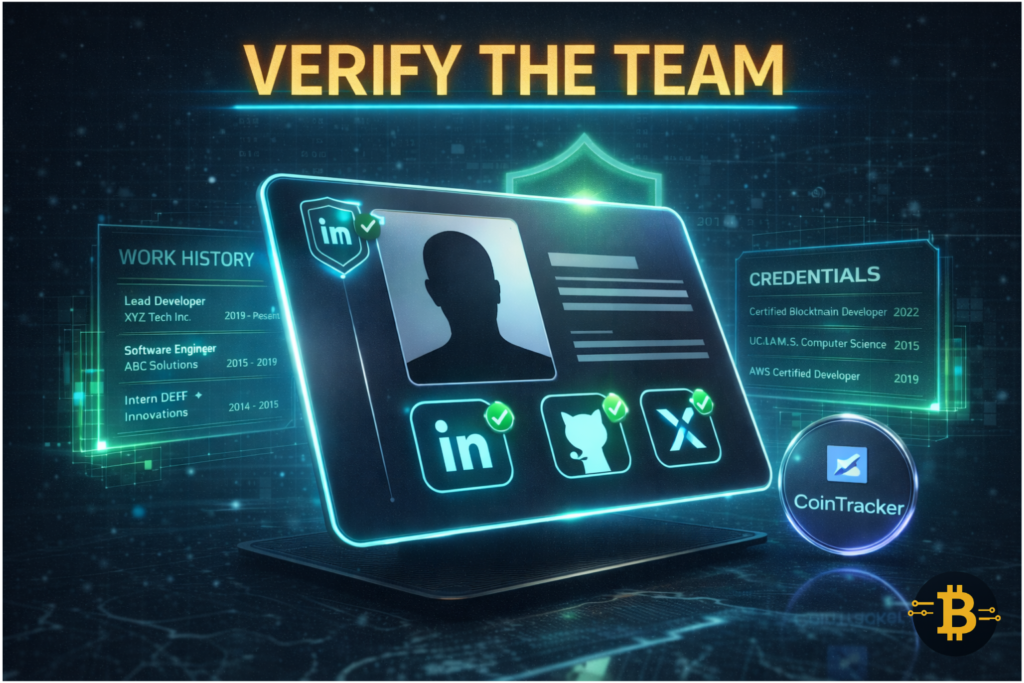
Team verification is your first and most important line of defense. Consequently, legitimate projects have team members willing to stake their professional reputations. Scammers hide behind anonymity or fake credentials.
What to Look for in Team Member Profiles
Start with LinkedIn. Search for each team member listed on the project website. Their profiles should show:
Professional history: Multiple previous positions with verifiable companies. A profile created last month with one position (the current project) raises immediate concerns.
Educational background: Degrees from real institutions. Scammers often claim prestigious universities but provide no details that could be verified.
Network connections: Real professionals have industry connections. A LinkedIn profile with 10 connections and no endorsements suggests fabrication.
Public activity: Posts, articles, or engagement that predates the project. This proves the account isn’t freshly created for the scam.
How to Spot Fake LinkedIn Accounts
Reverse image search profile photos using Google Images or TinEye. If the same photo appears on stock photo sites or belongs to someone else entirely, you’ve found a fake profile.
Check the profile’s creation date. Navigate to someone’s activity section – their first posts reveal when they actually joined LinkedIn. Profiles created weeks before a project launch are suspicious.
Look for generic descriptions and copied content. Scammers often copy real professionals’ bios, resulting in oddly generic or mismatched details.
Verify employment claims. If someone claims to have worked at Google, check their connections—do they have any Google colleagues? Real employees have coworker networks.
Red Flags in Anonymous Crypto Teams
Anonymous teams aren’t automatically scams. Privacy-focused projects like Bitcoin had anonymous creators for legitimate reasons. However, anonymous teams require extra scrutiny.
When anonymity works: Established anonymous developers with years of verifiable open-source contributions earn trust through code, not identity. Their GitHub history speaks for them.
When anonymity fails: Brand new projects with anonymous teams and no prior work history should be avoided. There’s no accountability, no reputation at stake, and no recourse if they rug pull.
The critical question: Why is this team anonymous? If they can’t provide a compelling reason beyond “privacy,” assume they’re preparing an exit.
Tools to Verify Team Credentials
LinkedIn: Primary verification tool. Cross-reference everything listed.
Twitter/X: Check account age, follower quality, and engagement patterns. Real people have conversations, not just promotional posts.
GitHub: For technical team members, verify their contribution history. A CTO should have substantial coding activity, not an empty GitHub profile.
Google: Simply searching “[Name] + [Company]” often reveals if their work history is fabricated. Real professionals leave digital footprints.
Professional networks: Industry groups, conference speaking engagements, and publications provide additional verification layers.
Tip: I’ve seen identical team member profiles used across multiple scam projects – same photos, slightly different names. Always reverse image search. One student avoided a $50,000 loss by discovering the “CTO’s” photo was a stock image. That 30-second check saved them from total loss.
Check #2: How to Analyze a Crypto Whitepaper

The whitepaper serves as a project’s business plan and technical blueprint. Therefore, it reveals whether the team understands what they’re building and can execute their vision. A poor whitepaper signals either incompetence or intentional deception.
Essential Elements Every Whitepaper Needs
Clear problem statement: What specific problem exists in the world? Vague statements like “revolutionizing finance” without concrete issues indicate shallow thinking.
Technical solution: How does this project solve the identified problem? Legitimate whitepapers explain their approach with enough detail for technical readers to evaluate feasibility.
Why blockchain: Most importantly, why is blockchain necessary for this solution? Many problems don’t require decentralization. Forcing blockchain where it doesn’t fit suggests the team is chasing trends rather than solving real issues.
Tokenomics explanation Detailed breakdown of token supply, distribution, vesting schedules, and utility. We’ll cover this deeply in Check #3, but the whitepaper must address it thoroughly.
Roadmap with milestones: Specific, dated goals that stakeholders can track. “Q2 2026: Launch mainnet” is concrete. “Future: Become number one” is meaningless.
Team introduction: Who is building this? What qualifies them? Links to verify credentials should be included.
Risk acknowledgment: Honest discussion of challenges, competitors, and potential failure points. Projects that admit no risks are either naive or dishonest.
How to Read a Crypto Whitepaper Effectively
Start with the abstract or executive summary. Can you understand what this project does in plain English? If the summary is incomprehensible jargon, either the team can’t communicate or they’re hiding behind complexity.
Read the problem statement carefully. Does this problem actually exist? More importantly, do you personally recognize this issue, or is it fabricated? Scammers invent problems that sound plausible but don’t reflect reality.
Examine the technical solution for feasibility. You don’t need to be a blockchain developer, but ask: Does this make sense logically? Are they claiming impossible things like “infinite scalability with perfect security”? Physics applies to blockchains – tradeoffs exist.
Check for plagiarism using online tools. Copy suspicious paragraphs into Google search with quotation marks. Scammers frequently copy sections from legitimate projects, hoping nobody notices.
Crypto Whitepaper Red Flags to Avoid
No whitepaper at all: Occasionally legitimate for meme coins that admit they’re pure speculation, but typically a massive red flag for serious projects.
Copied content: If sections appear in other projects’ whitepapers word-for-word, you’re looking at a scam.
Impossible promises: “Guaranteed returns,” “risk-free profits,” or “infinite scalability” all violate fundamental principles. Legitimate teams acknowledge tradeoffs and limitations.
Excessive complexity without substance: Real technical depth is specific and detailed. Fake complexity uses buzzwords without explaining anything meaningful.
Missing crucial sections: No tokenomics, no team info, no roadmap, or no risk discussion indicates rushed or deceptive documentation.
Poor quality: Spelling errors, grammatical mistakes, and unprofessional formatting suggest a team that can’t execute properly. If they can’t proofread their primary document, how will they build complex software?
Tip: Read whitepapers in this order: Problem statement, then tokenomics, then team credentials. If any of these three fail, stop reading – the rest doesn’t matter. This approach has saved me countless hours reviewing obvious scams that revealed themselves in the first three pages.
Check #3: Understanding Crypto Tokenomics Red Flags
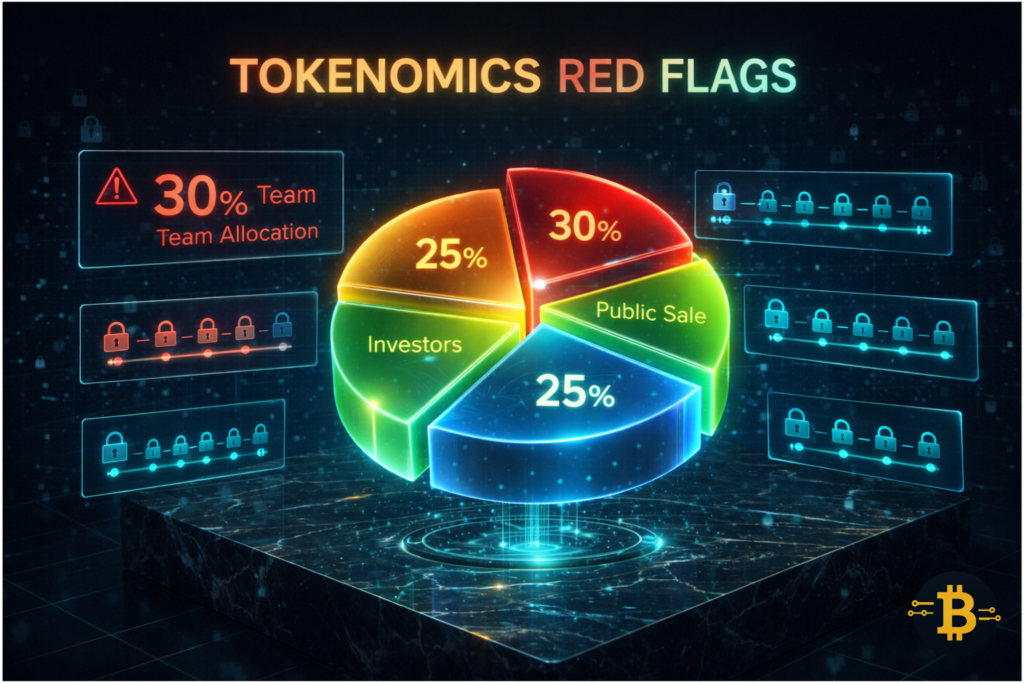
Tokenomics – the economic design of a cryptocurrency – determines whether a project can sustain itself long-term or is designed to enrich early insiders at your expense. Understanding what makes good tokenomics requires analyzing supply, distribution, and utility carefully.
What Is Token Vesting and Why It Matters
Token vesting locks team and investor allocations for specified periods, releasing them gradually. This prevents immediate dumping that crashes the price.
Good vesting example: Team receives 15% of supply locked for 1 year (cliff), then vesting monthly over 3 additional years. This means they can’t sell anything for 12 months, then only receive 1/36th of their allocation monthly for the next 36 months.
Bad vesting example: Team receives 30% with no lock, available immediately at launch. They can dump everything on day one, destroying the price and stealing investor money.
Consequently, always check vesting schedules on the project website or in the whitepaper. Projects that don’t mention vesting or claim “team tokens locked” without specifying the duration should be questioned aggressively.
How to Check Token Distribution
Token allocation charts show who controls what percentage. Look for these concerning patterns:
Team + advisors + private sale > 50%: If insiders control the majority, they can dump on public investors anytime. Public investors become exit liquidity for those who got better terms.
Extremely small public allocation: If only 5-10% goes to public sale while 60% goes to early insiders, you’re funding their exit strategy.
No allocation transparency: Projects that won’t publish clear distribution breakdowns are hiding something. Transparency is free – opacity serves only to deceive.
Reasonable allocation example:
- Public sale: 35-40%
- Team: 10-15% (4-year vest)
- Development fund: 20-25%
- Advisors: 5% (2-year vest)
- Private investors: 15-20% (1-2 year vest)
- Marketing/community: 10-15%
This structure distributes tokens fairly while ensuring long-term alignment
Warning Signs of Pump and Dump Tokenomics
Deflationary mechanics without utility: Projects that burn tokens or reduce supply without real demand create artificial scarcity. This attracts speculators but doesn’t build sustainable value, classic pump and dump.
Excessive staking rewards: Offering 500% APY staking rewards requires constant new money to pay existing stakers – a classic Ponzi structure.
Rebase tokens: While some legitimate examples exist, most rebase mechanisms confuse investors while enriching developers through complex supply changes.
Tax on transactions: Many scam tokens implement taxes on buys/sells, with proceeds going to “development wallets” that founders control. This extracts value with every transaction.
Liquidity not locked: If the team can remove liquidity from decentralized exchanges, they can rug pull instantly. Locked liquidity (verifiable on-chain) is essential.
Reading Token Allocation Charts
Access these charts on CoinGecko, CoinMarketCap, or the project’s website. Additionally, verify numbers match across sources – discrepancies indicate poor record-keeping or intentional confusion.
Check unlock schedules using tools like Token Unlocks or Vesting.info. Major unlocks create selling pressure. If 30% of supply unlocks next month, expect significant price impact regardless of project quality.
Calculate circulating vs total supply ratio. Projects with 10% circulating and 90% locked have massive future dilution ahead. Current price doesn’t reflect future supply impact.
Tip: The single most common tokenomics red flag I see: Team allocation over 25% with short or no vesting. This structure has preceded every rug pull I’ve analyzed. If founders control that much with weak vesting, they’re preparing to dump on you. Walk away immediately.
Check #4: Why Smart Contract Audits Are Essential
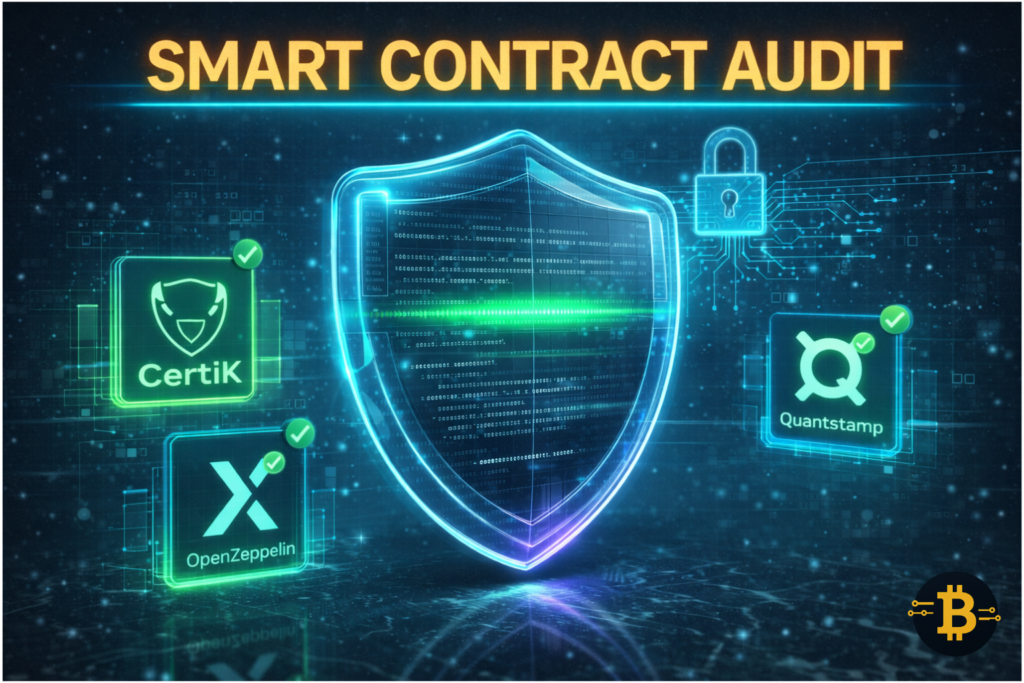
Smart contracts are code, and code has bugs. Consequently, those bugs can cost millions. Professional audits reduce – though don’t eliminate – the risk of exploitable vulnerabilities that could drain your investment overnight.
What Smart Contract Audits Actually Check
Security firms review contract code for common vulnerabilities:
Reentrancy attacks: Where malicious contracts can repeatedly call a function, draining funds before balance updates complete.
Access control issues: Ensuring only authorized addresses can execute critical functions like minting tokens or pausing contracts.
Integer overflow/underflow: Mathematical errors that can create or destroy tokens unintentionally.
Front-running vulnerabilities: Where miners or MEV bots can exploit transaction ordering to profit at users’ expense.
Centralization risks: Finding privileged functions that give developers excessive control over user funds.
Economic exploits: Flawed tokenomics or reward calculations that can be gamed for profit.
Top Crypto Audit Firms to Trust
CertiK: The most recognized name, having audited thousands of projects. Their audit shield badges appear on many legitimate project websites.
Quantstamp: Respected firm with significant DeFi expertise. They’ve caught critical bugs in major protocols.
OpenZeppelin: Known for both audits and creating secure smart contract templates that developers build upon.
Trail of Bits: High-end security firm that audits the most complex protocols. Their involvement signals serious security commitment.
ConsenSys Diligence: Ethereum ecosystem specialists with deep protocol knowledge.
SlowMist: Leading Asian audit firm with strong reputation in Eastern markets.
Lesser-known firms can provide value, but projects should ideally have multiple audits from different firms. Bugs one team misses, another might catch.
How to Verify an Audit Report Is Real
Scammers create fake audit reports constantly. Verification is straightforward:
Check the audit firm’s official website: Navigate to their published audits section. The audit should be listed there with a link to the full report.
Verify the date: Recent audits matter more than old ones. Code changes after audits, potentially introducing new vulnerabilities.
Read the findings: Real audits list discovered issues, their severity, and whether they were fixed. Projects with zero findings in an audit are suspicious – no code is perfect.
Check remediation status: Did the project fix critical and high-severity issues? Unresolved critical findings mean the project remains vulnerable.
Contact the audit firm: For significant investments, email the auditor asking to confirm they conducted the audit. Legitimate firms respond quickly.
What CertiK Audit Findings Mean
CertiK categorizes issues by severity:
Critical Immediate threats that can result in fund loss. These must be fixed before launch. Projects that launch with critical findings unresolved are reckless or malicious.
Major/High: Serious issues that could cause problems under specific conditions. Should be fixed promptly.
Medium: Issues that affect functionality or pose minor risks. Good teams address these.
Minor/Low: Best practice improvements and optimization suggestions.
Informational: Observations about code quality without security implications.
A project with 2-3 critical findings all fixed, several major findings remediated, and some minor findings remaining demonstrates responsible handling. Perfect audits don’t exist, but the response to findings reveals team quality.
When No Audit Is a Deal-Breaker
For DeFi protocols, lending platforms, bridges, or any project handling user funds directly, no audit is unacceptable. The risk is too high regardless of other positive signals.
For simple token contracts or non-custodial applications, audits are still important but absence might be acceptable if other security measures exist (timelock, limited privileges, established developer reputation).
However, most legitimate projects prioritize audits specifically because they understand security’s importance. Skipping audits when your project holds millions in TVL suggests either resource constraints (bad) or indifference to security (worse).
Tip: Read the actual audit report, not just the project’s summary. I’ve seen projects claim “audited by CertiK” while the actual report showed critical unresolved issues. The audit PDF is publicly available – download it, search for “critical,” and read every finding. This takes 10 minutes and has prevented six-figure losses for my students.
Check #5: How to Spot Fake Crypto Communities
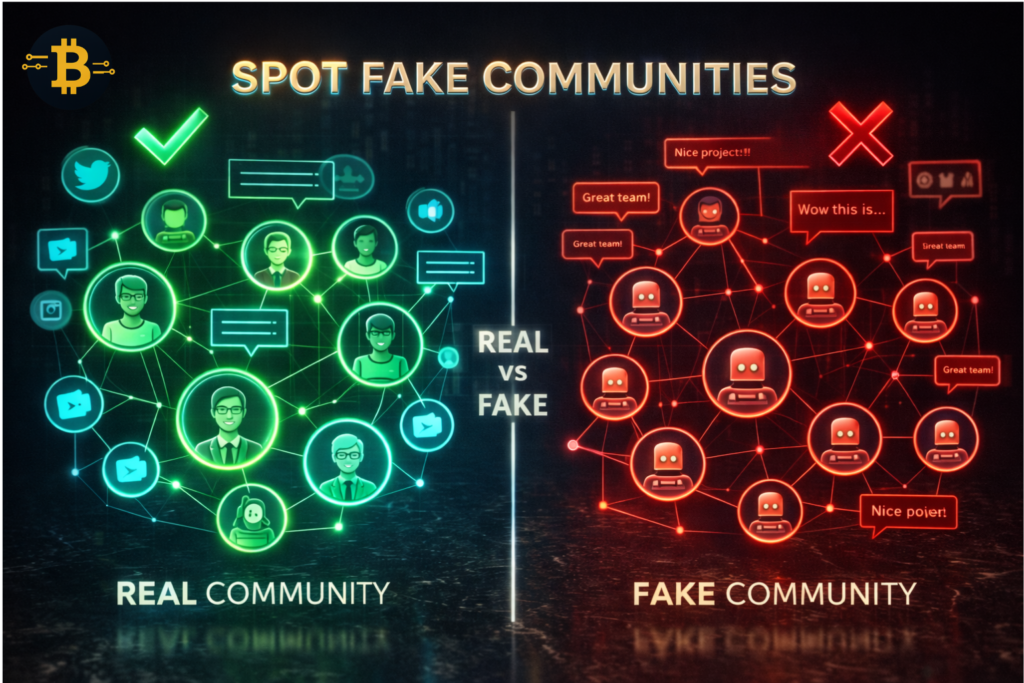
Community size and engagement appear easy to fake – and they are. Scammers buy followers, use bots, and create artificial hype that convinces real investors to join. Therefore, distinguishing organic communities from manufactured ones requires examining specific engagement patterns.
How to Spot Crypto Bot Followers
Check Twitter/X follower quality using tools like Twitter Audit or bot checking services. Warning signs include:
Sudden follower spikes: Legitimate accounts grow steadily. Gaining 10,000 followers overnight indicates bulk buying.
Engagement ratio mismatch: An account with 50,000 followers but posts averaging 5-10 likes suggests fake followers.
Generic follower profiles: Click through followers. Do they have profile pictures? Original posts? Human-like activity? Bots often have no profile pictures, generic names, and repetitive behavior.
Follower account age**: Bulk-purchased followers are typically new accounts created en masse.
Organic vs Paid Community Growth
Real communities develop gradually through word-of-mouth, genuine interest, and valuable content. Consequently, they show these characteristics:
Gradual growth: Steady increase over months, not sudden explosions.
Diverse conversations: Community discusses technology, use cases, concerns—not just “wen moon” and “buy the dip.”
Critical discussion allowed: Legitimate projects tolerate reasonable criticism. Communities that aggressively attack anyone questioning the project are cultish and manufactured.
Geographic diversity: Real interest spans time zones and regions. Communities concentrated in one region (often coordinated pump groups) raise concerns.
Non-promotional content: Organic communities share memes, discuss technology, and connect personally. Paid shills only promote and never engage meaningfully.
Checking Real Engagement Rates
Calculate engagement rate: (Likes + Comments + Shares) ÷ Followers × 100
Healthy engagement: 1-5% for larger accounts, 5-10% for smaller accounts
Suspicious engagement: Under 0.5% suggests bought followers who never interact
Check comment quality on posts. Real people write varied comments with different perspectives. Bots post generic phrases like “Great project!” or “To the moon! 🚀” repeatedly.
Look for conversations between community members, not just community-to-project communication. People who genuinely care about a project discuss it amongst themselves.
Discord and Telegram Red Flags
Immediate DMs from “admins”: Legitimate teams never message users first. Anyone DMing you offering help or special opportunities is a scammer.
Overwhelming positivity: Groups where every message is praise and nobody discusses concerns or asks hard questions are manufactured.
Bot commands dominating chat: While some automation helps, channels that are 80% bot messages and 20% human conversation feel artificial.
New member flood: Massive daily member influx without corresponding genuine discussion suggests bot-adding or pump group coordination.
Deleted criticism: Projects that delete critical but respectful questions are hiding something.
Visit the channel at different times. Real communities have active periods and quiet periods based on global time zones. Manufactured communities often show consistent bot activity 24/7.
Tip: Join the Discord or Telegram and lurk for 3-5 days before investing. Read through historical conversations. Ask a critical question (politely). How do admins and community respond? This “temperature check” has saved countless students from projects with fake communities and hostile leadership that revealed themselves immediately when questioned.
Check #6: Checking Real Development Activity on GitHub
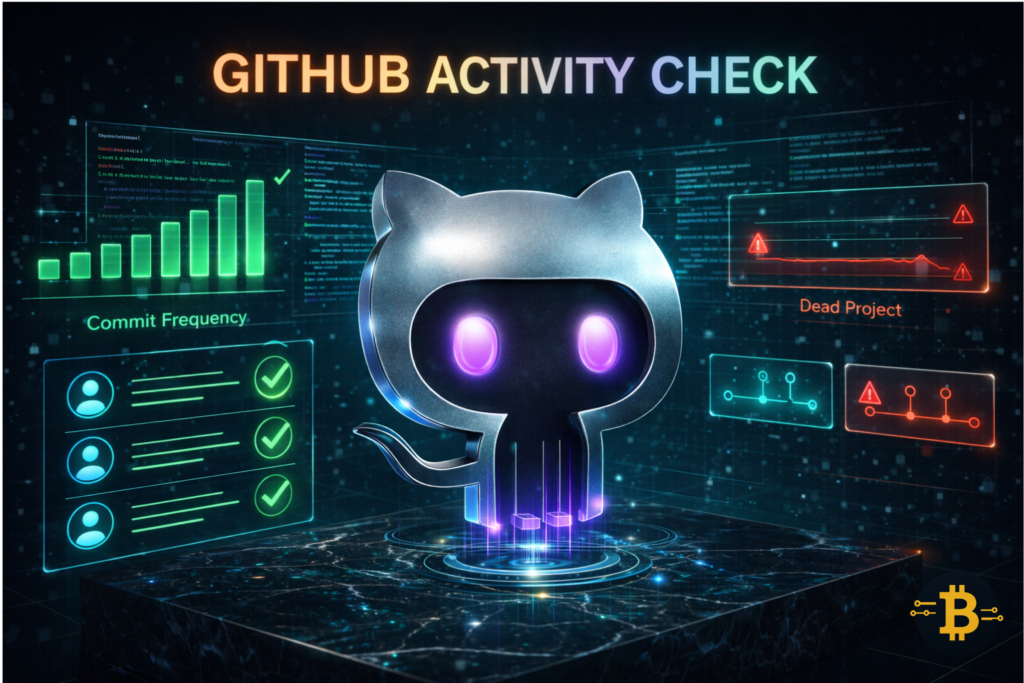
For technical projects, GitHub repositories reveal whether actual development is happening or if the “team” is just marketing vaporware. Checking GitHub is straightforward even for non-developers.
What to Look for in Crypto Project GitHub Activity
Navigate to the project’s GitHub repository (linked on their website or find it by searching “[Project Name] GitHub”).
Recent commits: Click the “commits” tab. When was the last code change? Projects should show commits within the past 1-2 weeks if they’re actively developing. Months without commits suggest abandoned development.
Multiple contributors: Click “Contributors.” Legitimate projects have several developers contributing code. Single-contributor projects might be one person doing everything, increasing bus factor risk.
Commit frequency: View the commit history graph. Healthy projects show consistent activity—not large gaps followed by sudden bursts (which suggests pre-launch prep for marketing purposes only).
Code review activity: Check “Pull Requests.” Are contributors reviewing each other’s code? Code review prevents bugs and shows collaborative development.
Issue discussion: Browse “Issues.” Do users report bugs? Do developers respond and fix them? Active issue tracking demonstrates responsive development.
Active vs Dead Crypto Project Comparison
Active project indicators:
- Daily or weekly commits
- 5+ regular contributors
- Issues opened and closed regularly
- Recent releases with changelogs
- Documentation updates matching new features
- Test coverage and CI/CD automation
Dead project indicators:
- Last commit 6+ months ago
- Single contributor (or none)
- Open issues with no responses
- No releases or version updates
- Outdated documentation
- Abandoned dependencies
Some projects complete development and don’t need constant commits – Bitcoin’s core development is slower because it’s mature. However, new projects claiming active development must prove it.
Understanding GitHub for Non-Developers
You don’t need to read code to verify activity. Focus on these easy checks:
Commit frequency graph: Visual representation of activity over time. Healthy graphs show consistent bars.
Contributor diversity: Multiple faces under contributors indicates real team development.
Recent activity: Last commit date tells you if development continues.
Issue management: Active projects have new issues (bugs/features) and closed issues (resolution).
README quality: Well-maintained projects have clear, updated README files explaining the project, how to use it, and how to contribute.
Compare the GitHub activity to the project’s roadmap. If the roadmap promises “Q4 2025: Launch smart contracts” but GitHub shows no smart contract code, they’re behind schedule or lying.
Tip: Check the “first commit” date on GitHub. If a project launched marketing in November 2025 but their first GitHub commit was October 2025, they spent minimal time actually building. One project I analyzed had six months of marketing with just two weeks of actual coding. That timing mismatch saved students from a guaranteed failure.
Check #7: How to Verify Crypto Project Partnerships

Partnership announcements pump tokens temporarily – scammers exploit this by announcing fake partnerships with major companies. Verification prevents falling for this common manipulation tactic.
How Fake Crypto Partnerships Work
Scammers announce partnerships with recognizable companies – Amazon, Google, Microsoft – knowing most investors won’t verify. They create professional-looking graphics, write press releases, and flood social media with the announcement.
The truth: They submitted their project to Amazon Web Services as a customer (anyone can do this), then framed it as an “AWS partnership.” Or they attended a Microsoft developer conference and claimed “partnership with Microsoft.”
Some scammers fabricate partnerships entirely, betting that fear of missing out (FOMO) will drive investment before anyone fact-checks.
How to Verify Partnership Claims
Check the partner’s official website: Navigate to their press releases or news section. Real partnerships appear in both companies’ official announcements.
Search the partner’s social media: Would a Fortune 500 company announce a major partnership? Yes, on their official channels. If only the crypto project mentions it, that’s a red flag.
Contact the partner directly: For significant investments, email or call the supposed partner asking to confirm. Legitimate partnerships are public record.
Look for joint marketing: Real partnerships result in co-branded materials, joint events, or collaborative development. One-sided announcements without reciprocation indicate exaggeration or fabrication.
Check partnership details: Vague announcements like “partnered with Amazon” mean nothing. Specific partnerships explain what each party contributes and what they’re building together.
Distinguishing Real Partnerships from Customer Relationships
Being an AWS customer doesn’t make you an AWS partner. Consequently, honest projects distinguish between:
Customer relationship: “We use AWS for hosting” or “Built on Chainlink oracles”
Technology partnership: “Integrated Chainlink price feeds with joint development support”
Strategic partnership: “Microsoft is investing $5M and providing enterprise sales support”
The first is neutral (everyone can be a customer). The second shows technical collaboration. The third indicates serious business alignment.
Projects that blur these distinctions intentionally mislead investors.
Red Flags in Partnership Announcements
Timing: Partnership announced right before a token sale or major price movement suggests price manipulation.
One-way announcement: Only the crypto project mentions it, never the supposed partner.
Vague details: No specifics about what the partnership entails or what it accomplishes.
Name-dropping: Listing multiple major companies in quick succession without substance.
Unverifiable claims: “Strategic partnership with undisclosed Fortune 500 company” means nothing if unverifiable.
Conflicting information: Partnership terms described differently across platforms.
Real partnerships take time to negotiate and announce jointly with clear terms. Rushed, one-sided announcements with vague details indicate deception.
Tip: I’ve seen dozens of fake “Walmart partnerships” and “Tesla collaborations” over the years. My rule: If the announcement seems major, check the supposed partner’s website within 24 hours. If they haven’t announced it themselves, it’s fake or exaggerated. This simple check prevented students from buying tokens that dumped 80% when the fake partnership was exposed.
Check #8: Does This Crypto Solve a Real Problem?
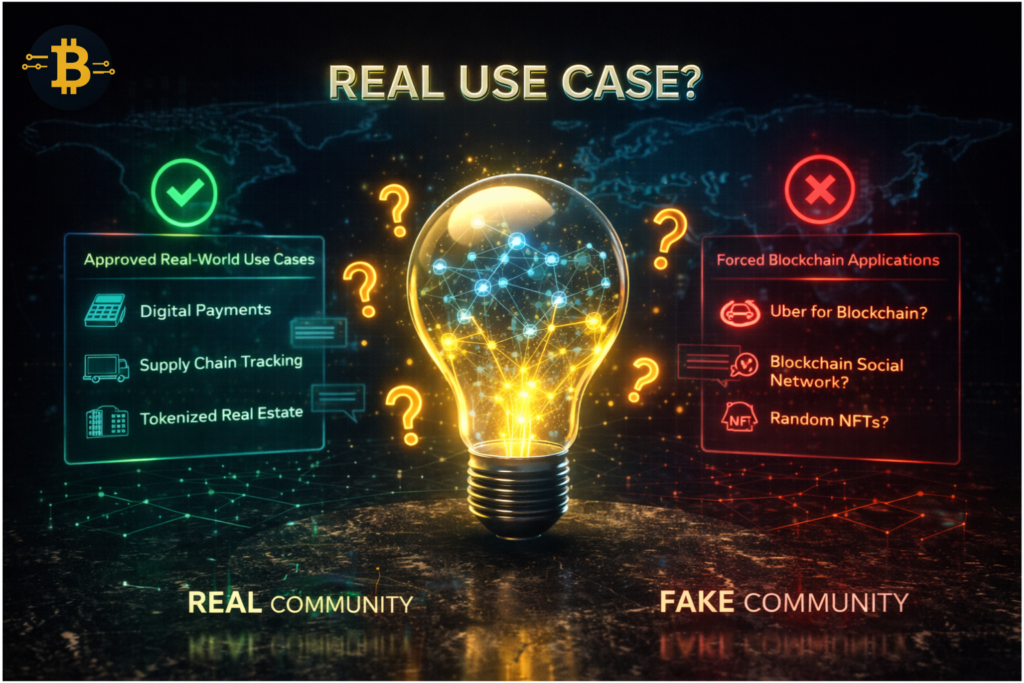
The final and most important question: Does this project need to exist? Many crypto projects are solutions searching for problems, forcing blockchain into situations where traditional solutions work better.
How to Evaluate Crypto Use Cases
Ask yourself three questions about the project’s stated purpose:
Does this problem actually exist? Not “could this be better?” but “is this causing real pain for real people?” Projects that invent theoretical problems rarely succeed.
Does blockchain solve it better than alternatives? Decentralization has tradeoffs – it’s slower, more expensive, and less efficient than centralized systems. What makes blockchain the superior choice here?
Is there demand for this solution? Even if the problem exists and blockchain solves it, will anyone actually use this? Market demand must exist.
Common Crypto Projects That Don’t Need Blockchain
Supply chain tracking: Centralized databases handle this efficiently. Blockchain adds cost without meaningful benefit in most cases.
Digital identity: Government IDs work. Decentralized alternatives solve problems most people don’t have.
File storage: Cloud storage like Google Drive or Dropbox is cheaper, faster, and more reliable than decentralized alternatives for most users.
Loyalty points: Centralized systems manage these well. Tokenizing loyalty points adds complexity without clear benefits.
This doesn’t mean blockchain has no use cases. Rather, most projects claim benefits that don’t materialize in practice.
Strong Crypto Use Cases That Make Sense
Censorship-resistant money: Bitcoin solved this – permissionless value transfer without government control.
Decentralized finance (DeFi): Lending, borrowing, and trading without intermediaries provides real utility, particularly in regions with poor banking infrastructure.
Provably fair systems: Gambling, lotteries, or any system where verifiable randomness and transparency matter.
Cross-border payments: Remittances benefit from blockchain’s speed and cost advantages over traditional wire transfers.
Digital scarcity: NFTs for digital art, collectibles, or in-game items prove ownership in ways traditional databases cannot.
Transparent fundraising: DAOs and tokenized governance enable new organizational structures with verifiable rules.
Questions to Ask About Any Crypto Project
Who currently solves this problem? If nobody does, maybe it’s not actually a problem worth solving.
Why haven’t they used blockchain? Often because blockchain doesn’t provide meaningful advantages.
What adoption exists? Projects should show early users, even if small-scale. Zero adoption after months/years indicates no real demand.
What’s the competitive advantage? Dozens of similar projects exist in every category. Why will this one win?
Can I explain the use case to a non-technical friend? If you can’t articulate the value clearly, it probably doesn’t exist.
Projects that can’t answer these questions convincingly are building for the sake of building – a recipe for eventual failure regardless of technical quality.
Tip: The “grandma test” works remarkably well. If you can’t explain why this project matters to someone completely unfamiliar with crypto, it probably doesn’t matter. Strong use cases are obvious when explained properly. Weak use cases hide behind jargon and complexity. My students who apply this test avoid projects that eventually fail despite hitting all other checkpoints.
Crypto Project Evaluation Checklist
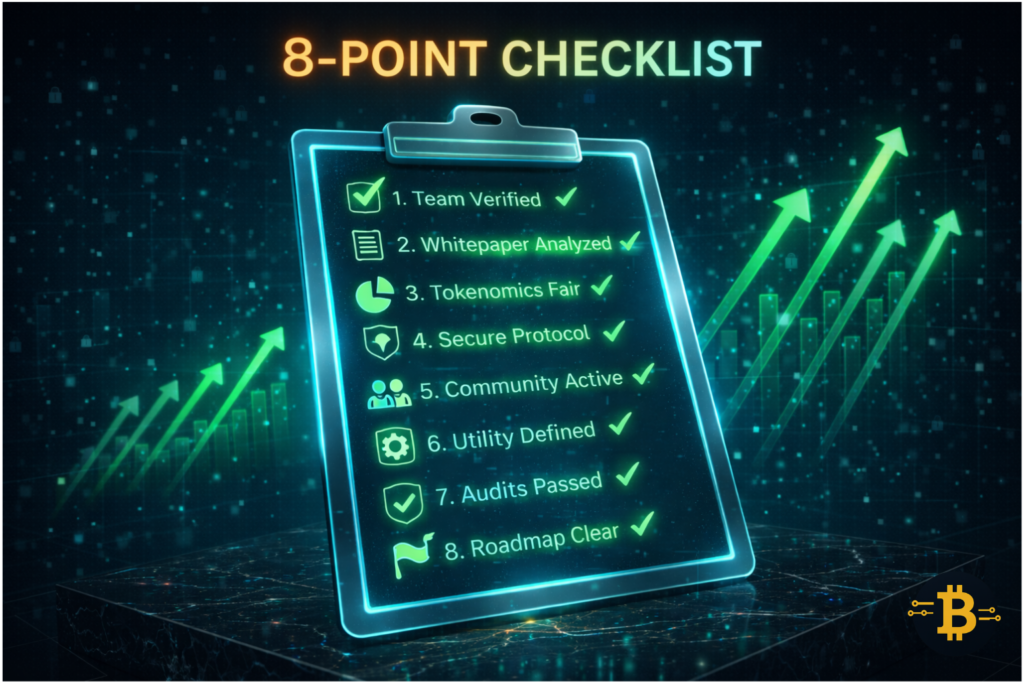
Use this comprehensive checklist before investing in any cryptocurrency project. Copy it, print it, and refer to it for every research session.
Team Verification (Check #1)
Team members have public identities (names, photos)
LinkedIn profiles exist and appear legitimate (created months/years ago)
Reverse image search confirms profile photos aren’t stock images
Professional work history is verifiable
Team has relevant experience for this specific project
GitHub profiles show technical contributions (for developers)
X/Twitter accounts have organic engagement, not just promotional posts
No red flags in team background (previous scams, abandoned projects)
Whitepaper Analysis (Check #2
Whitepaper exists and is professionally written
Problem statement is clear and describes a real issue
Technical solution is explained with sufficient detail
Blockchain necessity is justified (not just trend-chasing)
Roadmap includes specific milestones with dates
Risks and challenges are acknowledged honestly
No plagiarized content (checked via search)
No impossible promises (guaranteed returns, risk-free, etc.)
Tokenomics Evaluation (Check #3
Token allocation is transparent and published
Team allocation is 25% or les
Team tokens have vesting (minimum 1-year cliff, 3-4 year total)
Public allocation is fair (30%+ of total supply)
No hidden allocations or unclear distribution
Token utility is clear (not just “governance”)
Liquidity is locked (verifiable on-chain)
No major unlock events in next 3-6 months
Smart Contract Audit (Check #4)
Project has been audited by reputable firm(s)
Audit report is publicly available and linked
Audit is recent (within last 6-12 months)
Critical findings were addressed and fixed
High severity findings were resolved
Audit firm confirms authenticity (checked on their website)
Multiple audits from different firms (ideal but not required)
Community Analysis (Check #5)
Social media followers appear organic (not suddenly purchased)
Engagement rate is healthy (1-5% for large accounts)
Community discussions include diverse topics, not just price
Critical questions are answered, not deleted
No immediate admin DMs when joining Discord/Telegram
Community has been active for months, not days
Geographic diversity in community (not concentrated in one region)
Comment quality suggests real people, not bots
Development Activity (Check #6)
GitHub repository is public and accessible
Commits are recent (within last 1-2 weeks for active projects)
Multiple contributors, not just one developer
Consistent commit history, not sporadic bursts
Issues are being opened, discussed, and resolved
Code reviews are happening (pull requests reviewed)
Documentation is maintained and updated
Partnership Verification (Check #7)
Partnerships are announced on both partners’ official channels
Partnership details are specific, not vague
Supposed partners confirm relationship if contacted
Partnership timing isn’t suspicious (not right before token sale)
Claims distinguish between customer/partner/strategic relationships
No “undisclosed Fortune 500” vague claims
Use Case Evaluation (Check #8)
Project solves a real problem that people currently experience
Blockchain provides clear advantages over traditional solutions
Target market exists and is accessible
Early adoption or user traction is visible
Competitive advantage is articulated clearly
Use case can be explained simply to non-technical people
Similar projects haven’t all failed for obvious reasons
Overall Assessment
Passed 7-8 checks: Consider investment (still assess market conditions, risk tolerance)
Passed 5-6 checks: Proceed with extreme caution, small position only
Passed 3-4 checks: High risk, likely skip
Passed 0-2 checks: Definitely avoid
Common Mistakes When Researching Crypto Projects
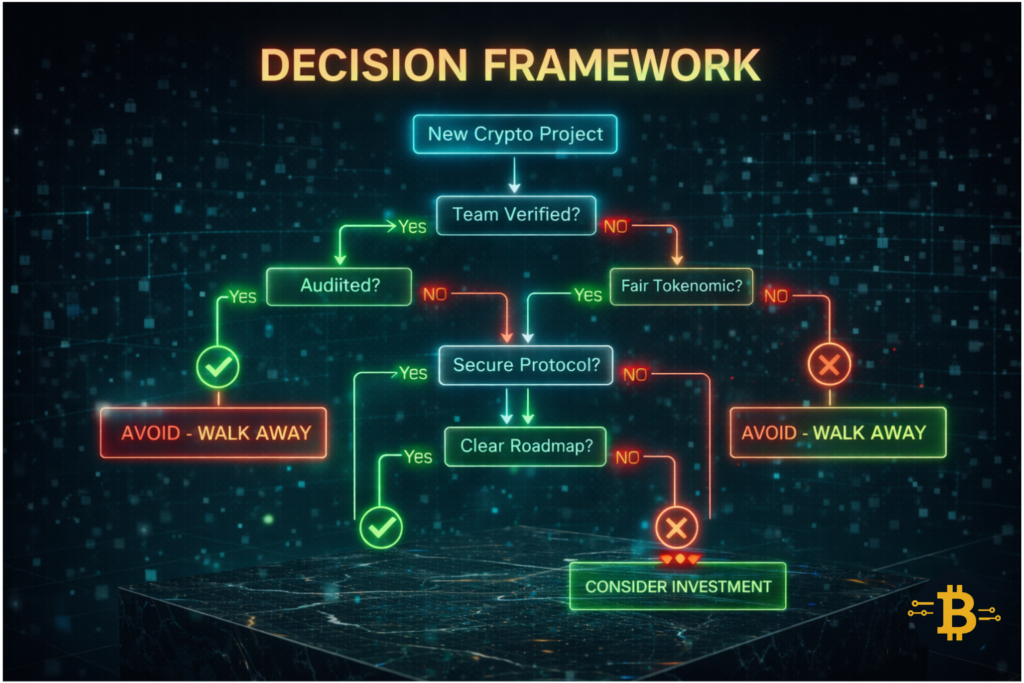
Even diligent investors make systematic errors when evaluating cryptocurrency projects. Recognizing these mistakes beforehand prevents costly oversights.
Mistake #1: Confusing Hype with Legitimacy
Large communities, excited social media discussion, and price momentum create false confidence. However, these signals are easily manufactured and often precede the biggest collapses.
SaveTheKids token had massive hype from influencers – it was still a rug pull. BitConnect had the largest, most enthusiastic community in crypto – it was still a Ponzi scheme. Consequently, hype indicates marketing effectiveness, not project quality.
Mistake #2: Trusting Influencer Endorsements
Crypto influencers get paid to promote projects – some disclose this, many don’t. Their involvement doesn’t validate legitimacy.
Moreover, influencers rarely conduct thorough due diligence. They’re marketers, not researchers. Treating influencer promotion as a quality signal inverts the actual relationship: promoted projects are often those paying for exposure because they can’t attract interest organically.
Mistake #3: Accepting “Audited” at Face Value
Seeing “audited by CertiK” and moving on without reading the audit is common. Yet, the audit might have found critical unresolved issues that the team ignored.
Always read the actual audit report. Check the findings section. Verify what was fixed. An audit with critical findings that remain unresolved is worse than no audit because it provides false security.
Mistake #4: Ignoring Red Flags Because Everything Else Looks Good
One red flag can invalidate everything else. An anonymous team with no vesting on 40% token allocation makes other positives irrelevant – the rug pull risk dominates.
Don’t rationalize away deal-breakers. If a critical check fails (team verification, audit, tokenomics), the investment should end regardless of strengths elsewhere.
Mistake #5: Researching After Buying
FOMO drives people to buy first, research later. This reversal explains most losses.
The entire point of this checklist is to prevent investments that don’t pass scrutiny. Buying, then checking, defeats the purpose. Moreover, post-purchase bias makes you defend your decision rather than objectively evaluate the project.
Research first, buy later. Never the reverse.
Mistake #6: Focusing on Technology While Ignoring Economics
Technical innovation means nothing if the tokenomics ensure failure. Brilliant blockchain technology with terrible token distribution creates losses for public investors regardless of technical merit.
Evaluate economics alongside technology. Both must work for investment success.
Tip: The biggest mistake I see: investors who partially research. They check 3-4 items, find no issues, and invest. Meanwhile, the items they skipped contained deal-breaking red flags. Partial research creates false confidence worse than no research. Complete every check, every time. No shortcuts.
Red Flags That Scream “Crypto Scam”
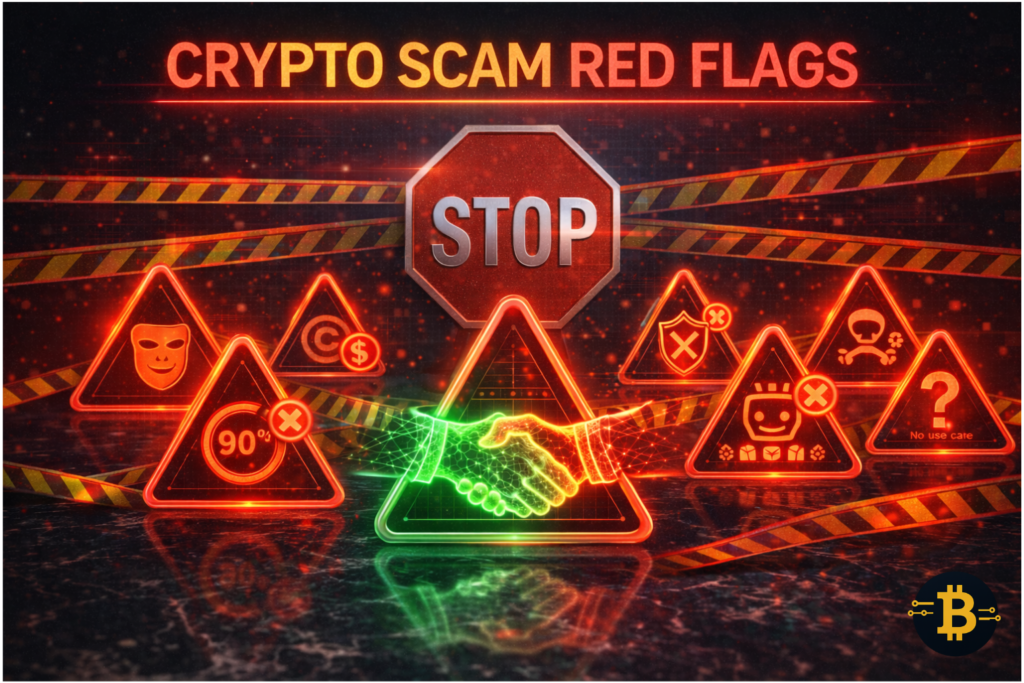
Certain warning signs indicate scams so reliably that seeing them should trigger immediate withdrawal. Here are the most reliable predictors of fraud.
Critical Red Flags (Walk Away Immediately)
Anonymous team with no vesting on large allocations**: This combination enables consequence-free theft. Team controls tokens, can dump anytime, faces no accountability.
No smart contract audit for DeFi/protocols: Projects handling user funds without professional security review are either incompetent or don’t care about losses.
Guaranteed returns or risk-free promises: These violate mathematical reality. Returns require risk. Guarantees are impossible in volatile markets.
Plagiarized whitepaper: Copying another project’s documentation proves either laziness or intentional fraud.
Aggressive marketing before product exists: Projects spending more on marketing than development are exit scams.
Team controls liquidity pool: If they can remove liquidity from DEX, they can rug pull instantly.
Pressure to invest quickly: “Offer ends in 24 hours!” tactics indicate scams. Legitimate opportunities don’t require rushed decisions.
Major Concerns (Investigate Thoroughly Before Proceeding)
Team allocation over 30% with short vesting: Creates massive incentive misalignment and future selling pressure.
No verifiable partnerships: All claims are unilateral without confirmation from supposed partners.
Dead GitHub with active marketing: They’re promoting vaporware, not building.
Only positive community sentiment: Organic communities include skeptics and critics. Universal positivity suggests cult behavior or fake engagement.
Complex tokenomics with hidden taxes: Unnecessarily complex mechanisms often hide value extraction.
Advisor list with no actual involvement: Name-dropping respected figures who aren’t actually advising misleads investors.
Warning Signs (Proceed with Extreme Caution)
New team with no track record: Higher risk, not necessarily scam, but requires extra scrutiny.
Unclear use case or forced blockchain: Project may fail from incompetence rather than malice.
Small or purchased community: Might be early rather than fake, but verify organic growth.
Minor audit findings unaddressed: Shows lack of attention to detail.
Roadmap with only vague future goals: Indicates poor planning.
Context-Dependent Concerns
Some “red flags” aren’t automatically disqualifying:
Anonymous team: Privacy-focused projects or developers in hostile jurisdictions have legitimate reasons. However, they must prove themselves through code and time.
No audit: Very early projects or simple tokens might not have audit budgets yet. But this limits investment size until audited.
Small community: Every project starts small. Check growth trends rather than absolute size.
The key is accumulation – one yellow flag isn’t necessarily fatal, but three yellow flags equal a red flag. Multiple minor concerns combine into major risk.
Tip: I maintain a “instant no” list of deal-breakers that override everything else: anonymous team with no vesting on 30%+ allocation, no audit for DeFi, plagiarized whitepaper, fake partnerships, or guaranteed returns. Seeing any of these means I don’t proceed to further research – it’s already over. This hard line has saved countless hours and prevented numerous losses.
Frequently Asked Questions
How do you know if a crypto project is legit?
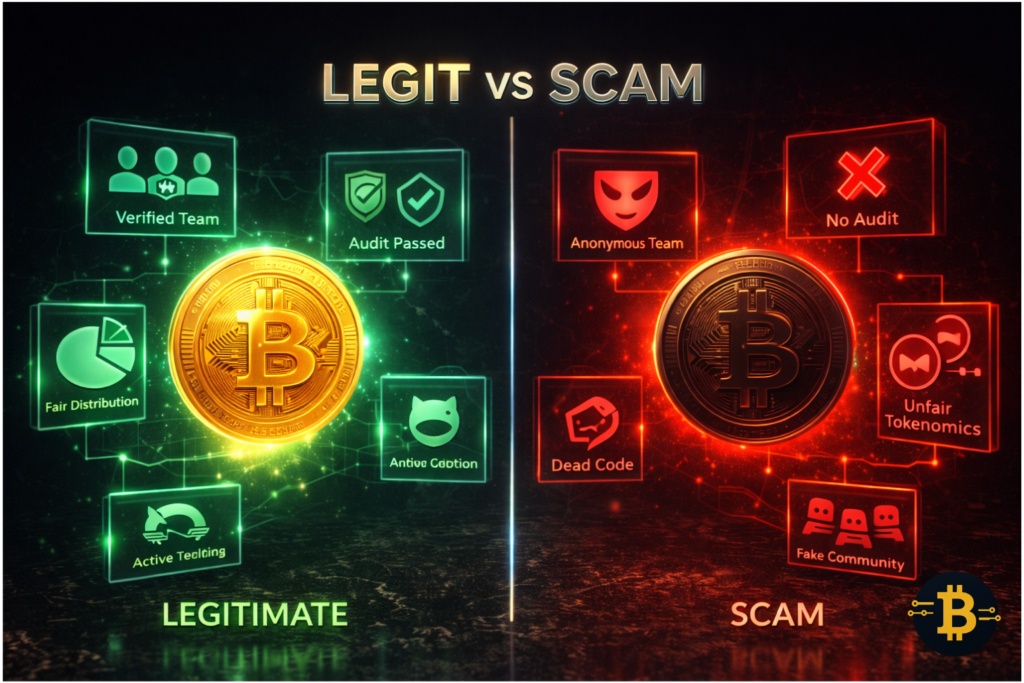
A legitimate crypto project has a verified team with real identities, a detailed whitepaper without plagiarism, fair tokenomics with vesting periods, smart contract audits from reputable firms, organic community engagement, active GitHub development, verified partnerships, and solves a real problem with blockchain technology. Projects passing 7-8 of these checks are likely legitimate, though legitimacy doesn’t guarantee investment success.
What are red flags in crypto projects?
Major red flags include: anonymous teams with large unvested token allocations, no smart contract audits for DeFi protocols, plagiarized whitepapers, vague or impossible promises, fake social media engagement, zero GitHub activity, unverified partnership claims, and no clear use case. Additionally, projects with team allocations exceeding 30%, guaranteed return promises, or aggressive pressure to invest quickly are typically scams.
How to verify a crypto project team?
Verify crypto teams by checking LinkedIn profiles for professional history and network connections, reverse image searching profile photos to confirm they’re not stolen, searching team names plus company names on Google, examining GitHub contributions for technical members, and verifying previous projects and employers. Real professionals have digital footprints—absence of verifiable information indicates fake identities.
What is good tokenomics in crypto?
Good tokenomics includes team allocation of 10-20% with 3-4 year vesting, fair public distribution of 30-40%, clear token utility within the ecosystem, controlled or capped inflation, locked liquidity, and no hidden allocations. This structure prevents team dumping and aligns long-term incentives between developers and investors.
Why are crypto smart contract audits important?
Smart contract audits are crucial because code bugs have caused billions in losses. Professional auditors from firms like CertiK, Quantstamp, and OpenZeppelin review contracts for vulnerabilities before hackers exploit them. Audits don’t guarantee safety but significantly reduce risk by catching issues early. For DeFi protocols handling user funds, audits are non-negotiable.
How to spot fake crypto communities?
Spot fake communities by checking for sudden follower spikes, engagement rates below 0.5%, generic bot-like comments, geographic concentration, aggressive positivity without critical discussion, and 24/7 uniform activity patterns. Real communities grow gradually, have diverse conversations, tolerate criticism, and show natural activity fluctuations based on time zones.
What to check on GitHub for crypto projects?
Check GitHub for recent commits (within 1-2 weeks), multiple contributors, consistent commit frequency, active issue discussion and resolution, code reviews on pull requests, and documentation updates. Dead projects show months without commits, single contributors, unresolved issues, and outdated dependencies. Compare GitHub activity to roadmap promises for consistency.
How to verify crypto partnerships?
Verify partnerships by checking the supposed partner’s official website and social media for announcements, contacting the partner directly to confirm, looking for joint marketing materials, and examining partnership specifics. Real partnerships are announced jointly with clear terms. One-sided announcements with vague details usually indicate exaggeration or fabrication.
Do crypto projects need whitepapers?
Serious technical projects require whitepapers explaining their problem statement, solution, technical approach, tokenomics, team credentials, roadmap, and risks. While meme coins might skip whitepapers by acknowledging pure speculation, any project claiming utility or solving problems must provide detailed documentation. No whitepaper for a “serious” project is a critical red flag.
What makes a crypto use case strong?
Strong crypto use cases solve real problems that people currently experience, provide clear advantages over traditional solutions through blockchain’s unique properties, have demonstrable demand, show early adoption or user traction, and can be explained simply to non-technical audiences. Projects forcing blockchain where centralized solutions work better typically fail regardless of technical quality.
Your Path to Smarter Crypto Investing
You now have a systematic framework to identify legitimate crypto projects and avoid scams that cost billions annually. More importantly, you understand that legitimacy alone doesn’t guarantee investment success – it’s the foundation upon which investment decisions should be built.
The eight-point checklist you’ve learned isn’t academic theory. It’s a practical defense system refined through ten years of analyzing hundreds of projects, witnessing countless scams, and helping thousands of investors protect their capital. Every check exists because I’ve seen people lose money by skipping it.
Most crypto losses aren’t from sophisticated hacks or unavoidable market crashes. They’re from preventable mistakes: investing in teams that couldn’t be verified, ignoring tokenomics red flags that guaranteed failure, trusting fake partnerships, or buying into projects with no real use case. These mistakes happen because investors skip systematic research in favor of FOMO-driven decisions.
Your greatest advantage in crypto investing is discipline. Markets reward those who research thoroughly, acknowledge red flags honestly, and walk away from opportunities that don’t pass scrutiny. The checklist in this guide provides that discipline structure.
Start small. Pick a project you’re interested in and work through all eight checks systematically. Time yourself – it probably takes 45-60 minutes the first time. By the tenth project, you’ll complete the process in 30 minutes. By the twentieth, pattern recognition kicks in and red flags become obvious immediately.
Remember: legitimate projects want scrutiny. They publish team information, share audit reports, explain tokenomics transparently, and answer critical questions directly. Projects that make research difficult do so intentionally – they’re hiding disqualifying information.
Download the checklist if you can, print it, and use it for every investment decision. Share it with friends and family who invest in crypto. Help them avoid the scams that this systematic approach catches reliably.
The cryptocurrency space offers genuine innovation and opportunity alongside pervasive fraud. The difference between profit and loss often comes down to asking the right questions before investing rather than after. You now know exactly which questions to ask.
About This Guide
This comprehensive guide was created to help crypto investors at all levels conduct proper due diligence and avoid common research mistakes that lead to losses. The methodology prioritizes practical verification steps over theoretical analysis.
Last Updated: December 19, 2025
Sources: This guide was researched using real case studies of crypto scams (BitConnect, OneCoin, SaveTheKids), security audit methodologies from leading firms (CertiK, Quantstamp), tokenomics analysis frameworks, and ten years of hands-on experience teaching cryptocurrency fundamentals and security.
This content is educational only and does not constitute financial or investment advice. Cryptocurrency investments carry substantial risk. Even with thorough due diligence, some risks remain unpredictable. Always conduct your own research and never invest more than you can afford to lose completely.
References
Anyaku, S. (2025a, December 3). How to avoid crypto scams: 15 red flags & protection tips. Cryptogiant –. https://cryptogiant.io/how-to-avoid-crypto-scams/
Anyaku, S. (2025b, December 11). What are smart contracts? Beginner’s guide with examples. Cryptogiant –. https://cryptogiant.io/what-are-smart-contracts-for-beginners/
Atlassian. (n.d.). Git commit. Atlassian. Retrieved December 21, 2025, from https://www.atlassian.com/git/tutorials/saving-changes/git-commit
Bartlett, J., & Byrne, R. (2022, July 1). Missing Cryptoqueen: Is Dr Ruja Ignatova the biggest Bitcoin holder? BBC. https://www.bbc.com/news/technology-61966824
Before you continue. (n.d.). Google.com. Retrieved December 21, 2025, from https://images.google.com
Copyscape plagiarism checker – duplicate content detection software. (n.d.). Copyscape.com. Retrieved December 21, 2025, from https://www.copyscape.com
Cryptocurrency prices, charts, and crypto market cap. (n.d.). CoinGecko. Retrieved December 21, 2025, from https://www.coingecko.com
Cryptocurrency prices, charts and market capitalizations. (n.d.). CoinMarketCap. Retrieved December 21, 2025, from https://coinmarketcap.com
Dhir, R. (2003, November 25). Understanding pump-and-dump schemes: Definition, illegality, and types. Investopedia. https://www.investopedia.com/terms/p/pumpanddump.asp
Discord – group chat that’s all fun & games. (n.d.). Discord.com. Retrieved December 21, 2025, from https://discord.com
GitHub · Change is constant. GitHub keeps you ahead. (n.d.).
Hayes, A. (2003, November 18). What is a white paper? Investopedia. https://www.investopedia.com/terms/w/whitepaper.asp
LinkedIn: Log in or sign up. (n.d.). LinkedIn. Retrieved December 21, 2025, from https://www.linkedin.com
PR Newswire: press release distribution, targeting, monitoring and marketing. (n.d.). Prnewswire.com. Retrieved December 21, 2025, from https://www.prnewswire.com
Quantstamp: Securing the future of Web3. (n.d.). Quantstamp.com. Retrieved December 21, 2025, from https://quantstamp.com
Sharma, R. (2021, March 8). Non-fungible token (NFT): What it means and how it works. Investopedia. https://www.investopedia.com/non-fungible-tokens-nft-5115211
Telegram – a new era of messaging. (n.d.). Telegram. Retrieved December 21, 2025, from https://telegram.org
The blockchain data platform. (2024, October 17). Chainalysis. https://www.chainalysis.com
Twitteraudit.com. (n.d.). Twitteraudit.com. Retrieved December 21, 2025, from https://www.twitteraudit.com
Trail of Bits. (n.d.). Trail of Bits. Retrieved December 21, 2025, from https://www.trailofbits.com
Vesting: What it is and how it works. (2003, November 23). Investopedia. https://www.investopedia.com/terms/v/vesting.asp
What is a DAO? (n.d.). Ethereum.org; Ethereum Foundation. Retrieved December 21, 2025, from https://ethereum.org/en/dao/
What is DeFi? (n.d.). Ethereum.org; Ethereum Foundation. Retrieved December 21, 2025, from https://ethereum.org/en/defi/
What to know about cryptocurrency and scams. (2021, April 21). Consumer Advice. https://consumer.ftc.gov/articles/what-know-about-cryptocurrency-and-scams
(N.d.-a). Cnbc.com. Retrieved December 21, 2025, from https://www.cnbc.com/2021/06/18/crypto-save-the-kids-token-plummets-after-pump-by-creators.html
(N.d.-b). Investopedia.com. Retrieved December 21, 2025, from https://www.investopedia.com/tech/bitconnect-bitcoin-scam/
(N.d.-c). Tineye.com. Retrieved December 21, 2025, from https://tineye.com
(N.d.-d). Investopedia.com. Retrieved December 21, 2025, from https://www.investopedia.com/terms/t/tokenomics.asp
(N.d.-e). Unlocks.App. Retrieved December 21, 2025, from https://token.unlocks.app
(N.d.-f). Certik.com. Retrieved December 21, 2025, from https://www.certik.com
(N.d.-g). Consensys.net. Retrieved December 21, 2025, from https://consensys.net/diligence/
(N.d.-h). Investopedia.com. Retrieved December 21, 2025, from https://www.investopedia.com/terms/r/reentrancy-attack.asp
(N.d.-i). Investopedia.com. Retrieved December 21, 2025, from https://www.investopedia.com/terms/f/fomo.asp
(N.d.-j). Investopedia.com. Retrieved December 21, 2025, from https://www.investopedia.com/terms/r/rug-pull.asp