

If Bitcoin introduced digital money, smart contracts introduced digital agreements. Every time you swap tokens on Uniswap, mint an NFT on OpenSea, or earn yield on Aave, you’re using smart contracts – even if you don’t know it.
Understanding what smart contracts are is the key to understanding how modern cryptocurrency actually works.
Here’s what most people don’t realize: Traditional contracts require lawyers, paperwork, and trust that the other party will honor their word. Smart contracts eliminate all three. They’re self-executing computer programs that run automatically when conditions are met – no middlemen, no delays, no room for human error or dishonesty.
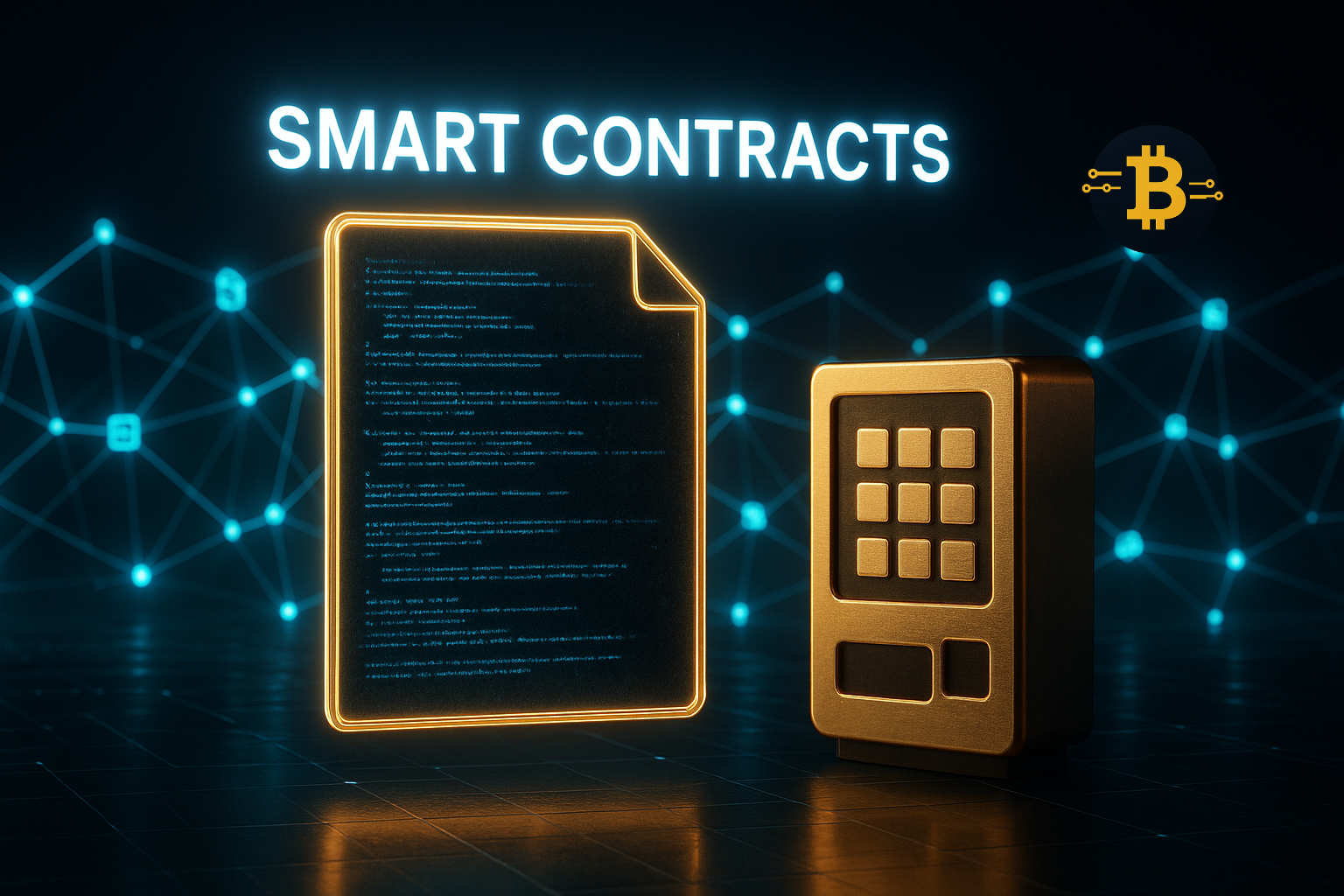
What are smart contracts? Smart contracts are self-executing computer programs stored on a blockchain that automatically perform actions when predetermined conditions are met. Think of them as digital vending machines: you provide input (payment), the code verifies conditions, and the output (product or service) is delivered automatically – no human intervention needed.
This guide explains smart contracts in the simplest possible terms, using real examples from platforms you may already use. You’ll learn what they are, how they work without technical jargon, why they’re revolutionary, and see concrete examples from DeFi, NFTs, and DAOs. No coding knowledge required.
Table of Contents
- What Are Smart Contracts? (Simple Definition)
- How Do Smart Contracts Work? (Explained Without Coding)
- Why Smart Contracts Are Important (The Benefits)
- Real-World Smart Contract Examples You've Probably Used
- A Beginner-Friendly Smart Contract Example (Step-by-Step)
- Smart Contract Risks and Limitations (The Honest Truth)
- The Future of Smart Contracts
- Frequently Asked Questions About Smart Contracts
- Understanding Smart Contracts: Your Next Steps
- About This Guide
- References
What Are Smart Contracts? (Simple Definition)
Smart contracts are self-executing computer programs stored on a blockchain that automatically carry out actions when specific conditions are met. Unlike traditional contracts written on paper and enforced by legal systems, smart contracts are written in code and enforced by blockchain technology.
The term “smart contract” can be confusing – they’re not artificially intelligent (“smart”), and they’re not always legal contracts. Instead, think of them as automated agreements: “if X happens, then do Y” – with no middleman required to verify or enforce the agreement.
Breaking Down the Term
Let’s break down what makes a smart contract “smart” and why it’s called a “contract”:
“Smart” means:
- Automatically executes (no human needed to flip the switch)
- Self-verifying (checks conditions itself)
- Responds to triggers instantly
“Contract” means:
- Defines rules and conditions
- Specifies what happens when conditions are met
- Creates binding agreements (in code, not words)
“On blockchain” means:
- Stored across thousands of computers (decentralized)
- Cannot be changed once deployed (immutable)
- Transparent (anyone can inspect the code)
- No single point of failure
The combination creates something unprecedented: agreements that execute themselves without requiring trust in any institution or individual.
The Vending Machine Analogy (Understanding Smart Contracts)
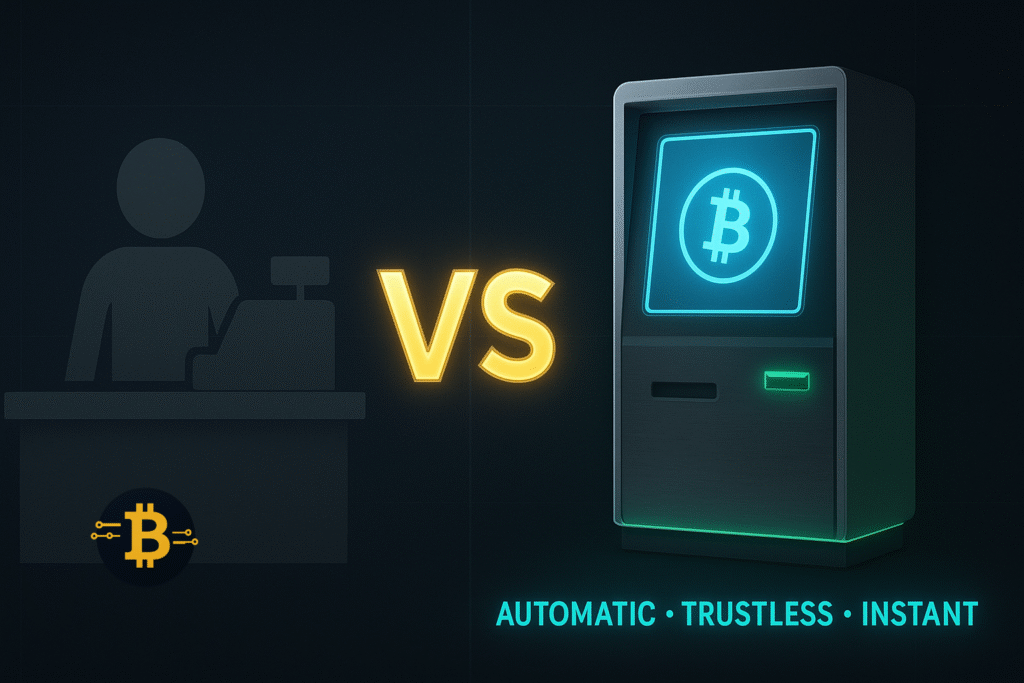
The simplest way to understand what smart contracts are: think of a vending machine.
Traditional contract:
- You want a soda
- You find a shop clerk
- You trust they’ll give you the right product
- You trust they’ll give correct change
- The human executes the transaction
Smart contract (vending machine):
- You insert money (input)
- Machine verifies amount is correct (condition check)
- If conditions are met, machine releases soda automatically (output)
- If not enough money, machine returns it
- No human required, no trust needed
This is exactly how smart contracts work on blockchain:
- Something triggers the contract (payment, signature, time, external data)
- Contract automatically checks if conditions are met
- If yes, contract executes the programmed action
- Result is recorded permanently on blockchain
The vending machine analogy isn’t perfect – smart contracts are far more powerful – but it captures the core concept: automated execution based on pre-set rules.
How Do Smart Contracts Work? (Explained Without Coding)
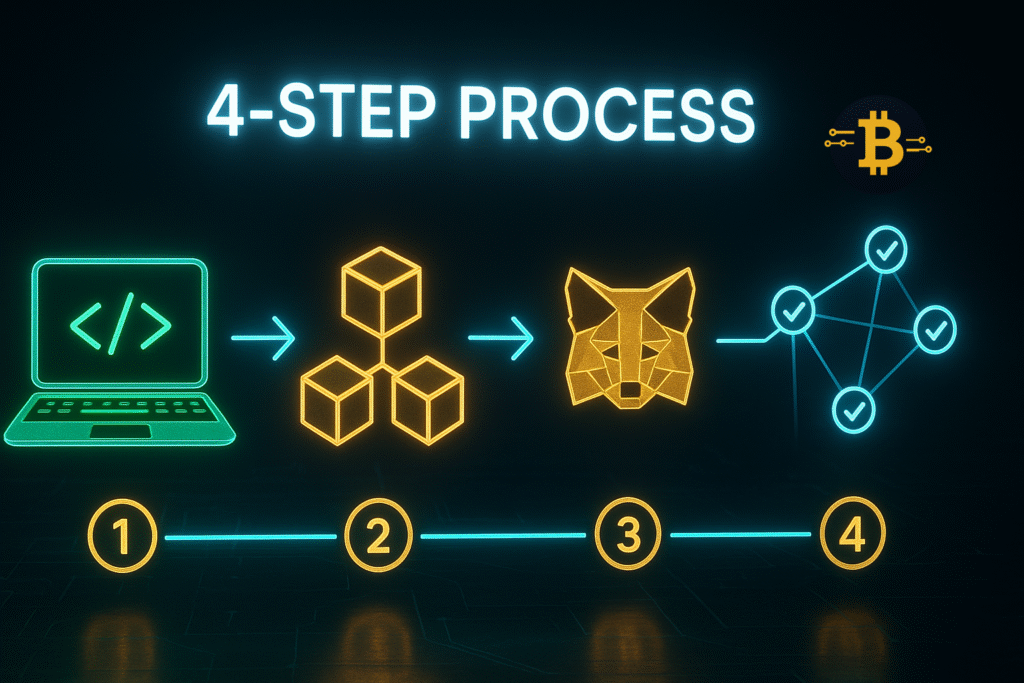
Understanding how smart contracts work doesn’t require programming knowledge. Here’s the process from creation to execution, explained in plain English.
Step 1: Code Is Written in a Programming Language
Smart contracts are written in specialized programming languages, most commonly:
- Solidity – Used on Ethereum (most popular)
- Rust – Used on Solana
- Move – Used on Aptos and Sui
- Haskell – Used on Cardano
- Vyper – Alternative for Ethereum
You don’t need to learn these languages to use smart contracts – just like you don’t need to understand HTTP to browse the internet. Developers write the code, users interact through simple interfaces (websites, apps, wallets).
The code contains:
- Conditions (if this happens…)
- Actions (then do this…)
- Data storage (remembering information)
- Logic (how to handle different scenarios)
Step 2: Contract Is Deployed to the Blockchain
Once written, the smart contract is deployed (uploaded) to a blockchain network. This is like publishing a program that anyone can use.
What happens during deployment:
- Developer sends the contract code to the blockchain
- The network assigns it a unique address (like a phone number)
- Contract becomes publicly accessible at that address
- Code becomes immutable – it can never be changed or deleted
Immutability explained simply:
Think of it like sending a message in permanent ink. Once the smart contract is on the blockchain, you cannot edit it, even if you find a mistake. This is both a strength (nobody can tamper with it) and a limitation (bugs are permanent unless the contract has special upgrade functions built in).
This is why smart contract audits (security reviews) are crucial before deployment.
Step 3: Users Interact With the Contract
Users don’t interact with smart contract code directly. Instead, they use:
Wallets (MetaMask, Phantom, Coinbase Wallet)
- Connect your wallet to sign transactions
- Wallets communicate with smart contracts for you
User interfaces (Websites and apps)
- Uniswap‘s website is a front-end for its smart contracts
- OpenSea‘s interface lets you interact with NFT contracts
- You click buttons; the interface sends instructions to the contract
Other smart contracts
- Contracts can trigger other contracts
- This creates complex DeFi protocols where multiple contracts work together
When you “connect wallet” on a DeFi platform, you’re giving permission for that website’s interface to interact with smart contracts on your behalf.
Step 4: The Blockchain Network Executes the Contract
When someone triggers a smart contract (by sending a transaction), here’s how smart contracts work behind the scenes:
- Transaction is broadcast to the blockchain network
- Miners/validators receive it (depending on the blockchain)
- They run the smart contract code on their computers
- Contract checks conditions: Do you have enough tokens? Is the price right? Has the deadline passed?
- If conditions are met: Contract executes the programmed action
- Result is recorded permanently on the blockchain
- All nodes update their copy of the blockchain with the new state
The key: Thousands of computers independently verify and execute the same code, reaching consensus on the result. This makes smart contract execution trustless – you don’t trust a person or company, you trust the math and code verified by a decentralized network.
Why Smart Contracts Are Important (The Benefits)
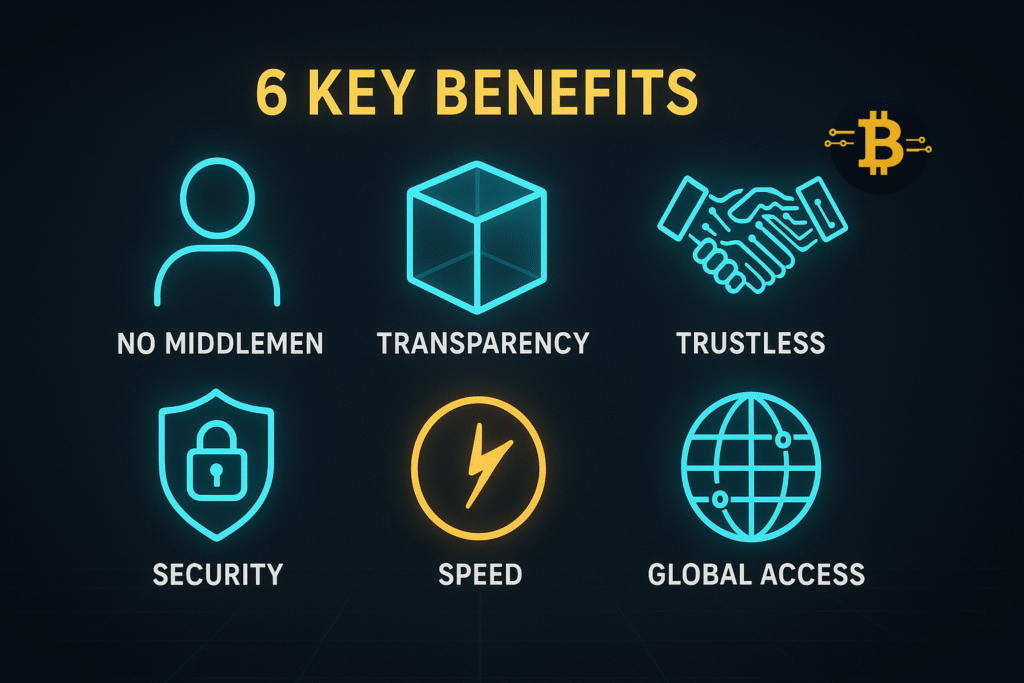
Smart contracts aren’t just technically interesting – they solve real problems with traditional agreements. Here are the benefits of smart contracts that make them revolutionary.
1. Automation: No Middlemen Required
Smart contracts eliminate intermediaries like banks, brokers, lawyers, and escrow agents. This means:
- Faster execution – Instant instead of days/weeks
- Lower costs – No fees to middlemen
- 24/7 availability – No business hours or holidays
- No human delays – Contract executes automatically when conditions are met
Real example: On Uniswap (decentralized exchange), smart contracts automatically swap your tokens at current market price – no broker, no clearinghouse, no settlement period. The entire process takes seconds.
2. Transparency: Anyone Can Verify
Every smart contract on blockchain is public. Anyone can:
- Read the code to see exactly what it does
- Verify the rules before using it
- Check transaction history
- Audit how funds are handled
This transparency builds trust. With traditional contracts, you often can’t see the full agreement or verify execution. With smart contracts, everything is open source and verifiable.
3. Trustlessness: Trust the Code, Not People
You don’t need to trust the other party or any institution. The smart contract code defines what happens, and the blockchain enforces it automatically.
Traditional scenario: You hire a freelancer. You trust they’ll deliver work. They trust you’ll pay.
Smart contract scenario: Payment goes into contract. When work is submitted (or deadline passes), contract automatically releases payment according to rules. No trust required – the code guarantees execution.
4. Security: Decentralized and Tamper-Resistant
Smart contracts run on decentralized networks with these security features:
- No single point of failure (thousands of nodes)
- Immutable once deployed (can’t be altered)
- Cryptographically secured
- Consensus mechanism ensures accuracy
However: Security depends on code quality. Well-written contracts are extremely secure. Poorly written ones can have vulnerabilities (more on this in the risks section).
5. Cost and Time Efficiency
By removing intermediaries and automating execution:
- Legal fees eliminated for many use cases
- Processing time reduced from days to seconds
- Administrative costs cut dramatically
- Global access with just internet and wallet
Compare: International wire transfer (2-5 days, $30-50 fees) vs. Smart contract token transfer (seconds, $0.50-5 fees depending on network).
6. Global and Permissionless
Anyone with internet access and a wallet can use smart contracts:
- No geographic restrictions
- No account approval required
- No discrimination based on country, credit score, or identity
- Accessible 24/7/365
This creates financial inclusion for billions who can’t access traditional banking.
Real-World Smart Contract Examples You’ve Probably Used
The best way to understand smart contracts is through concrete smart contract examples. Here are real platforms and use cases where smart contracts power billions of dollars in daily transactions. You may have already used some without realizing it.
1. Cryptocurrency Token Transfers (ERC-20 Tokens)
Every cryptocurrency token on Ethereum uses smart contracts. When you send USDT, USDC, SHIB, or any ERC-20 token, a smart contract handles the transfer.
What the smart contract does:
- Checks you have enough tokens in your balance
- Deducts tokens from your wallet
- Adds tokens to recipient’s wallet
- Records the transaction on blockchain
- Prevents double-spending
Real example:
USDT (Tether) is a smart contract on Ethereum (address: 0xdac17f958d2ee523a2206206994597c13d831ec7). This contract:
- Mints new USDT when Tether company adds reserves
- Burns USDT when they redeem it
- Transfers USDT between users
- Can freeze addresses if needed (controversial but illustrates contract capabilities)
Every time someone sends USDT, they’re not sending the token – they’re calling functions on this smart contract to update balances. The USDT itself never “moves”; the contract just updates who owns what.
2. Decentralized Exchanges (DEXes): Uniswap Example
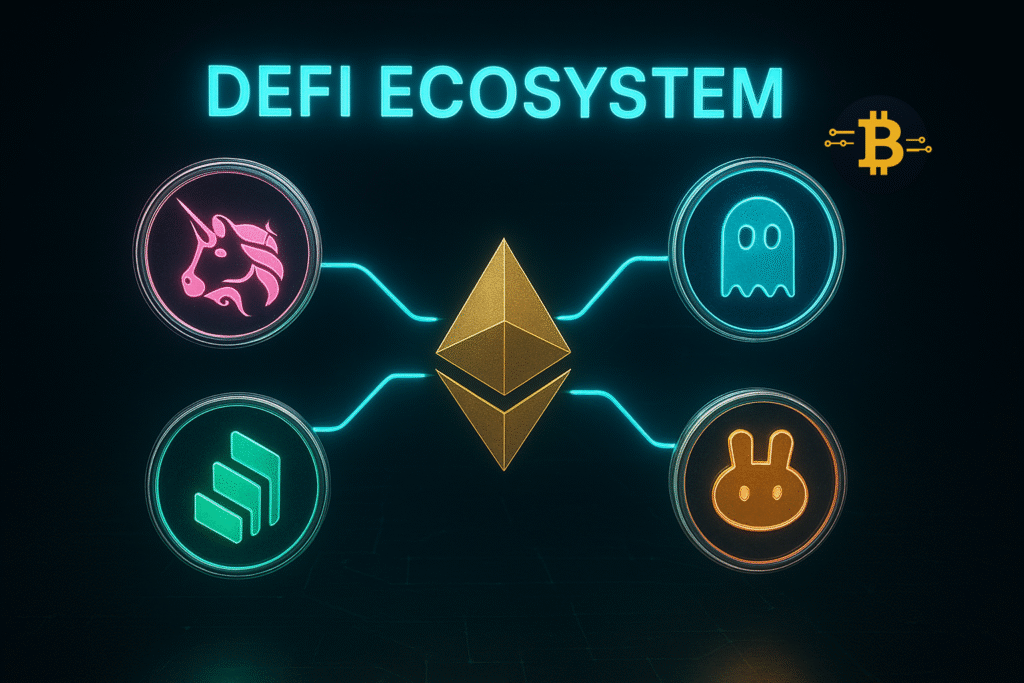
Uniswap is the largest decentralized exchange, processing billions daily – all through smart contracts with zero human operators.
How Uniswap smart contracts work:
- Liquidity pools – Smart contracts hold token pairs (e.g., ETH/USDC)
- Automated Market Maker (AMM) – Contract calculates prices using mathematical formula
- Swap function – When you trade, contract:
- Takes your input token
- Calculates output amount based on pool ratio
- Gives you the output token
- Updates pool balances
- All automatically, instantly
No middleman needed:
- No order books
- No matching buyers and sellers
- No central authority approving trades
- No settlement period
Other DeFi smart contracts examples:
- PancakeSwap (on Binance Smart Chain)
- Curve Finance (specialized for stablecoins)
- SushiSwap (Uniswap fork with governance token)
When you see “Connect Wallet” on these sites, you’re authorizing your wallet to interact with their smart contracts. The website is just a user interface – the smart contracts are where the actual trading happens.
3. NFTs: Digital Ownership and Royalties
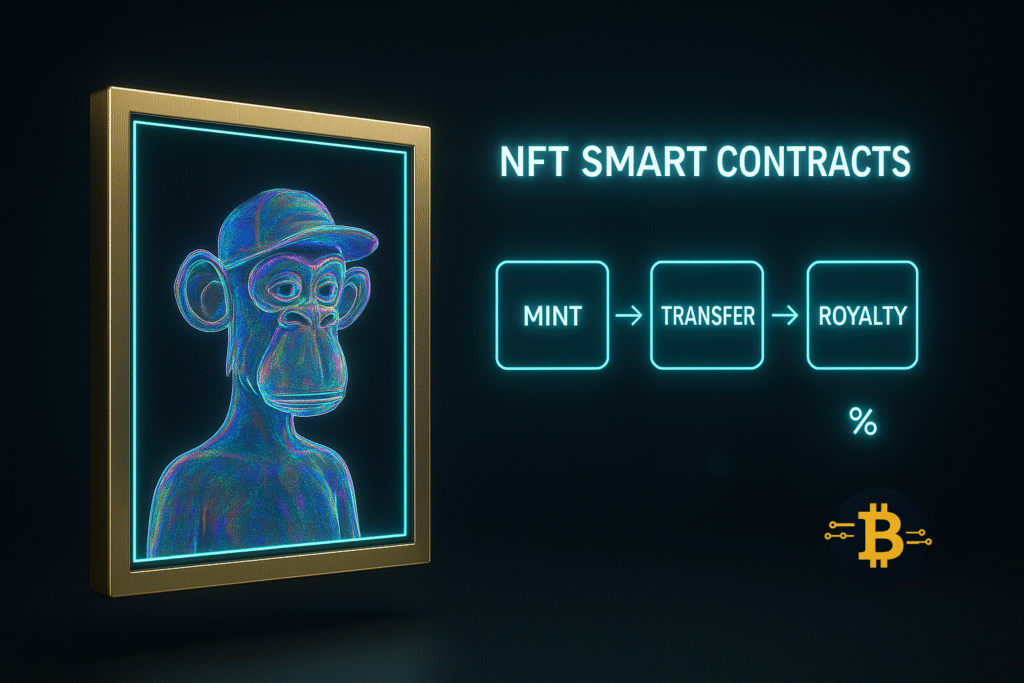
Every NFT is created and managed by smart contracts. When you mint, buy, or sell an NFT, smart contracts handle everything.
What NFT smart contracts do:
Minting:
- Creates a unique token ID
- Links to metadata (image, properties)
- Assigns ownership to your wallet address
- Records creation on blockchain
Transfers:
- Verifies you own the NFT
- Changes ownership record
- Logs the sale price
Royalties (the revolutionary part):
- Automatically pays original creator a percentage (e.g., 5-10%) on every resale
- Happens instantly, no tracking or enforcement needed
- Built into the contract code permanently
Real example:
Bored Ape Yacht Club (BAYC) uses smart contract at address 0xBC4CA0EdA7647A8aB7C2061c2E118A18a936f13D. This contract:
- Created 10,000 unique apes
- Manages ownership of each
- Handles transfers between owners
- Cannot be altered (apes can’t be modified or duplicated)
When someone buys a BAYC on OpenSea, they’re not buying from OpenSea – they’re interacting with BAYC’s smart contract through OpenSea’s interface.
4. Lending and Borrowing: Aave and Compound
DeFi lending platforms use smart contracts to create banks without bankers.
How Aave smart contracts work:
- Lenders deposit tokens (USDC, ETH, etc.) into smart contract
- Contract pays them interest (APY calculated algorithmically based on utilization)
- Borrowers provide collateral (usually 150%+ of loan value)
- Contract lends them tokens at current interest rate
- If collateral value drops below threshold, contract automatically liquidates position
No humans involved in:
- Approving loans (algorithm-based)
- Calculating interest (contract does math)
- Enforcing repayment (automatic)
- Managing collateral (contract holds it)
- Liquidations (triggered automatically)
Compound example:
You deposit 10 ETH worth $30,000. Compound smart contract:
- Gives you cETH (receipt token) proving your deposit
- Allows you to borrow up to ~75% ($22,500) in stablecoins
- Charges interest on your loan
- Pays you interest on your deposit
- Monitors your collateral ratio 24/7
- Liquidates automatically if ratio drops dangerously low
All of this happens without loan officers, credit checks, or paperwork.
5. DAOs: Decentralized Governance
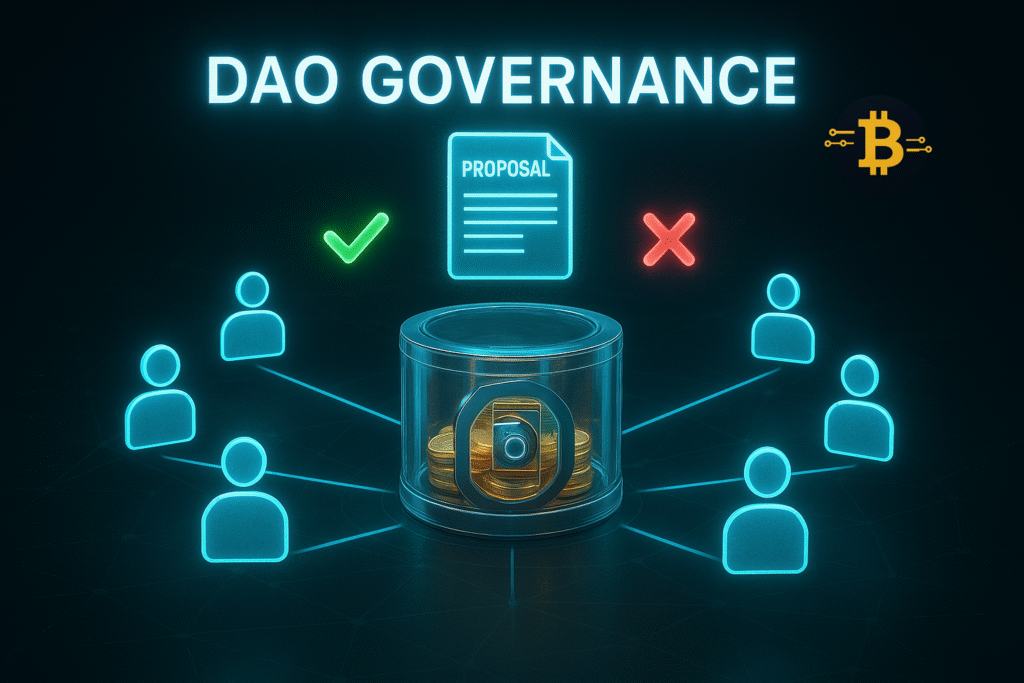
Decentralized Autonomous Organizations (DAOs) use smart contracts to coordinate communities and manage treasuries without traditional corporate structures.
What DAO smart contracts handle:
Voting:
- Proposal is submitted to smart contract
- Token holders vote (one token = one vote typically)
- Contract tallies votes automatically
- If proposal passes, contract executes the action automatically
Treasury management:
- Holds community funds
- Releases funds only when proposals are approved
- Tracks all spending transparently
Membership:
- Tracks who owns governance tokens
- Grants voting rights automatically
- Can revoke or transfer membership
Real example – Uniswap DAO:
- Controls $1+ billion treasury
- Governance token (UNI) holders vote on protocol changes
- Smart contract automatically implements approved changes
- No CEO, no board of directors – the code is the governance
Other major DAOs: MakerDAO (manages DAI stablecoin), Compound governance, Aave governance.
6. Payments and Escrow
Smart contracts eliminate the need for escrow services in transactions.
Freelance payment example:
Traditional:
- Client and freelancer use Upwork/escrow service
- Escrow holds payment
- Freelancer delivers work
- Client approves
- Escrow releases payment (minus 10-20% fee)
- Takes 5-14 days
Smart contract:
- Client sends payment to smart contract
- Freelancer submits work
- After deadline or approval, contract releases payment automatically
- Fee: Only blockchain gas fee (~$1-5)
- Takes seconds-minutes
Real platforms using this:
- Request Network
- Chainlink‘s smart contract oracle services
- Various freelance platforms building on Ethereum
| Function | Traditional System | Smart Contract |
| Token Transfer | Bank processes, 1-3 days | Instant, self-executing |
| Exchange | Central order book, settlement time | Automated market maker, instant |
| NFT Sale | Platform holds escrow, fees 5-15% | Direct peer-to-peer, fees <3% |
| Lending | Credit check, approval time, paperwork | Algorithmic, instant, no paperwork |
| Governance | Board votes, unclear execution | Transparent voting, automatic execution |
| Escrow | Third party holds funds, 5-14 days | Smart contract holds, instant release |
A Beginner-Friendly Smart Contract Example (Step-by-Step)
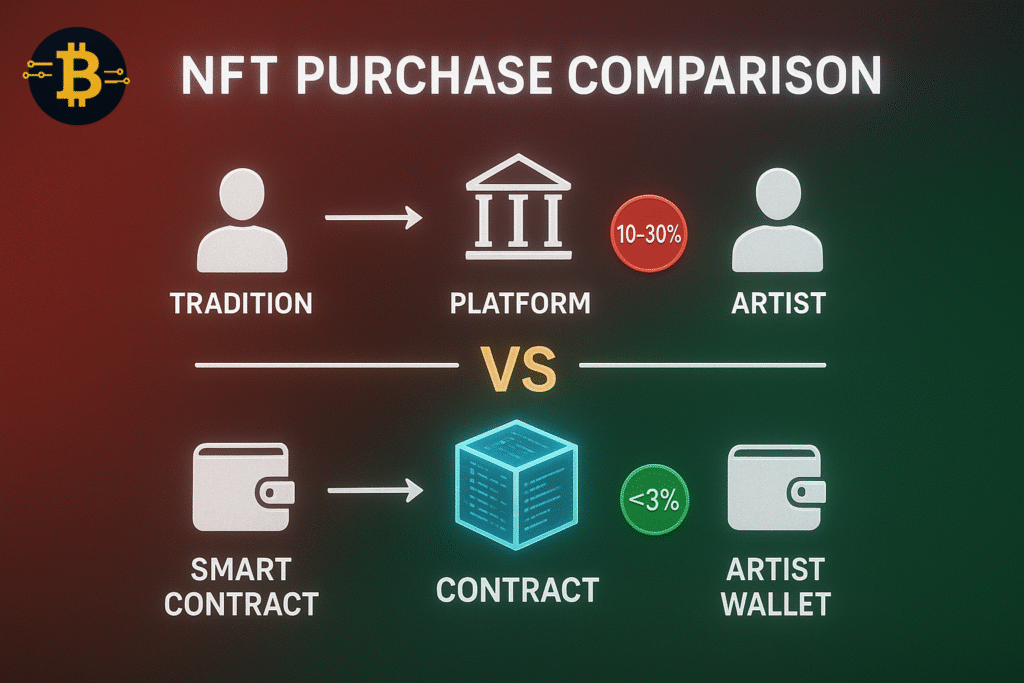
Let’s walk through a simple smart contract example to see how all the pieces fit together.
Scenario: You Want to Buy Digital Artwork
Without smart contract (traditional):
- Artist lists artwork on platform
- You pay platform (PayPal, credit card)
- Platform holds money
- Artist sends artwork file
- You confirm receipt
- Platform releases payment to artist (minus 10-30% fee)
- Process takes days
- You trust platform and artist
With smart contract:
- Artist deploys NFT smart contract with artwork
- You connect wallet and pay (e.g., 0.1 ETH)
- Smart contract instantly:
- Verifies you sent correct amount
- Transfers NFT ownership to your wallet
- Sends payment to artist’s wallet
- Records transaction permanently on blockchain
- Process takes seconds
- Cost: Only gas fee (~$2-10 depending on network)
- No trust required – code guarantees exchange
The magic: The smart contract acts as simultaneous escrow, payment processor, and ownership registry – all in one, all automatic, all trustless.
This same logic powers purchases on OpenSea, Rarible, and every NFT marketplace.
Smart Contract Risks and Limitations (The Honest Truth)
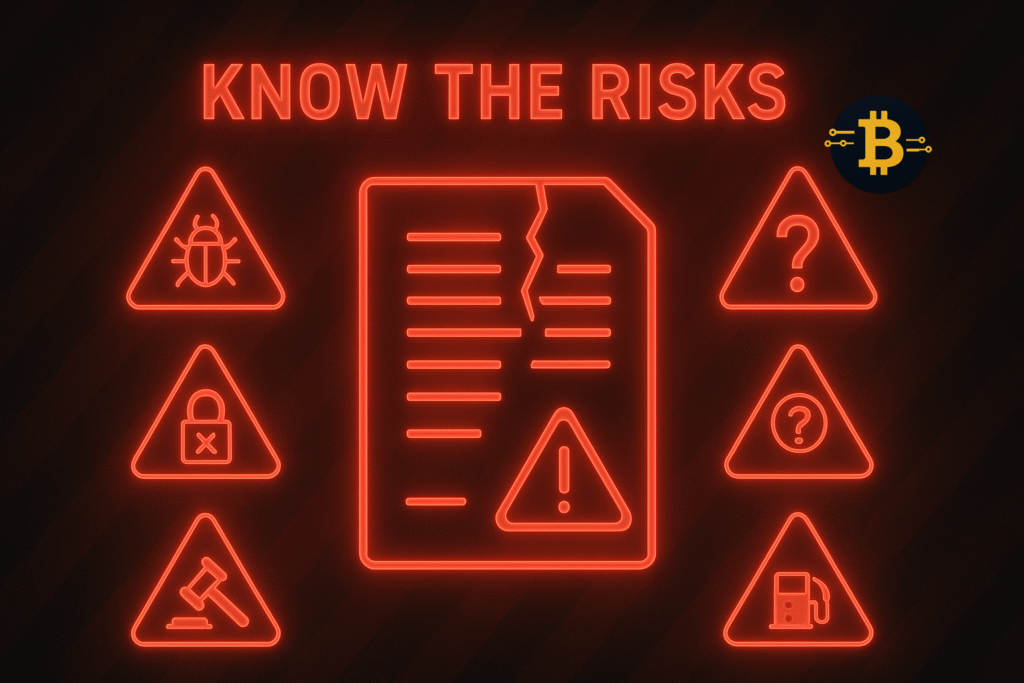
Smart contracts are powerful, but they’re not perfect. Understanding smart contract risks is crucial before using DeFi platforms or investing in blockchain projects. Here’s what can go wrong.
1. Code Bugs and Exploits
Smart contracts are only as secure as the code that creates them. Programming errors can lead to catastrophic losses.
Famous example – The DAO Hack (2016):
- The DAO raised $150 million in ETH
- Hacker found vulnerability in smart contract code
- Exploited “re-entrancy” bug to drain $60 million
- Led to controversial Ethereum hard fork
Recent examples:
- Ronin Bridge (2022) – $625 million stolen due to security flaw
- Wormhole Bridge (2022) – $325 million exploited
- Euler Finance (2023) – $197 million flash loan attack
The problem: Once deployed, smart contract code is immutable. If there’s a bug, it can’t be fixed without special upgrade mechanisms built in from the start.
Protection: Only use platforms that have:
- Multiple security audits from reputable firms (CertiK, Trail of Bits, OpenZeppelin)
- Bug bounty programs
- Long track record without incidents
- Open-source code reviewed by community
2. Immutability Can Be a Double-Edged Sword
The immutability that makes smart contracts secure also creates challenges:
Can’t fix mistakes:
- Send funds to wrong address? Gone forever
- Discover bug after deployment? Can’t patch it
- Want to update features? Must deploy entirely new contract
Some contracts include “upgrade” functions:
- Allow developers to fix issues
- But this introduces centralization risk
- Creates trust requirement (defeating original purpose)
The trade-off: Pure immutability (security but no flexibility) vs. upgradeability (flexibility but potential for abuse).
3. Oracle Problem: Getting Real-World Data
Smart contracts can only access data on the blockchain. They can’t directly check:
- Weather conditions
- Sports scores
- Stock prices
- Whether a package was delivered
This is the “oracle problem” – how do smart contracts get real-world information?
Solution: Oracle services (like Chainlink) feed external data to blockchain.
New risk: If the oracle is compromised or provides false data, the smart contract will execute based on wrong information.
Example: A smart contract betting on sports needs accurate scores. If the oracle is manipulated, it could pay out incorrectly – and the contract can’t reverse it.
4. Gas Fees and Network Congestion
Executing smart contracts costs “gas” (transaction fees). Costs vary:
- Ethereum mainnet: $5-$50+ per transaction during congestion
- Layer 2s (Arbitrum, Optimism): $0.10-$2
- Alternative chains (Solana, Polygon): $0.01-$0.50
Problem: High fees make small transactions uneconomical. A $20 DeFi trade might cost $15 in gas on Ethereum.
This limits accessibility and use cases until scaling solutions mature.
5. Legal Uncertainty
Smart contracts exist in legal gray areas:
- Are they legally binding contracts?
- Who’s liable if something goes wrong?
- How are they taxed?
- What jurisdiction governs them?
Different countries have different answers – or no answers yet. This creates:
- Regulatory risk for projects
- Uncertainty for users
- Potential for future restrictions
Note: This is evolving. Some jurisdictions (Wyoming, Switzerland) are creating smart contract-friendly legal frameworks.
6. User Error and Irreversibility
There’s no “undo” button with smart contracts:
- Approve a malicious contract? It can drain your wallet
- Send to wrong address? Gone forever
- Sign a transaction you don’t understand? Could give unlimited permissions
Protection:
- Never approve contracts you don’t trust
- Double-check addresses character-by-character
- Understand what you’re signing before confirming
- Use hardware wallets for large amounts
- Revoke unnecessary token approvals regularly (using tools like Revoke.cash)
The Future of Smart Contracts
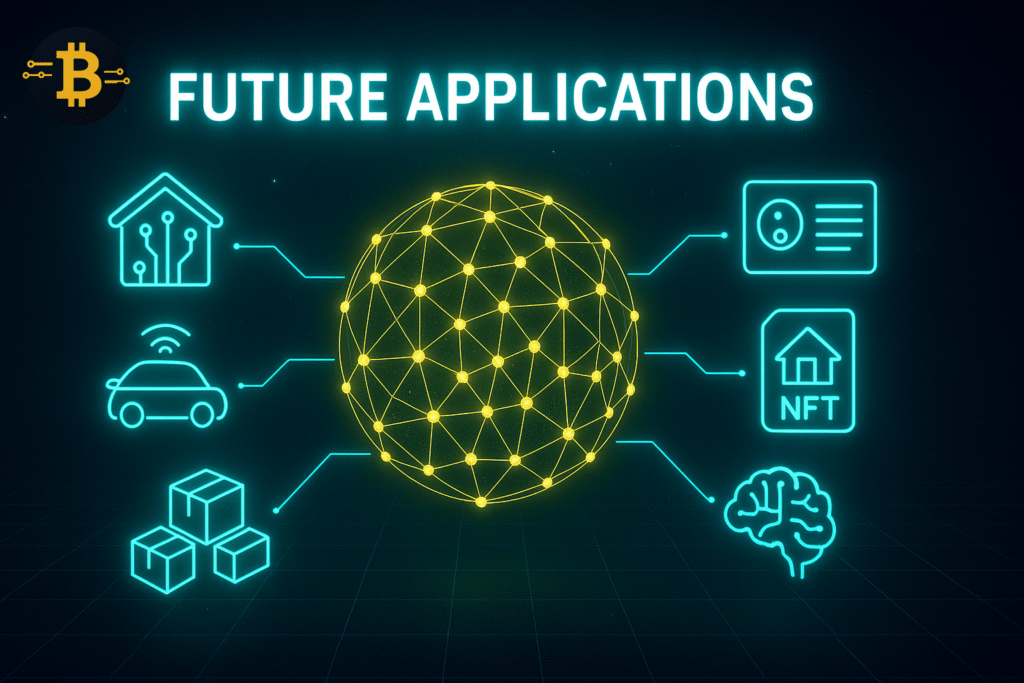
Smart contracts are still in early stages. Future applications include:
Supply chain management:
- Track products from factory to consumer
- Automate payments at each step
- Verify authenticity
- Example: IBM Food Trust already uses this for Walmart
Digital identity:
- Self-sovereign identity on blockchain
- Control your own data
- Prove credentials without revealing private information
Internet of Things (IoT):
- Devices pay each other automatically
- Self-driving cars pay tolls and parking
- Smart home devices coordinate and transact
Real estate:
- Property ownership as NFTs
- Automated escrow for home purchases
- Fractional property ownership
Technical evolution:
Smart contract technology is evolving:
- Account abstraction – Wallets themselves become smart contracts (better UX, recovery options)
- Zero-knowledge proofs – Private smart contracts that don’t reveal transaction details
- Cross-chain smart contracts – Contracts that work across multiple blockchains
- AI integration – Combining smart contracts with artificial intelligence
The goal: Make smart contracts as easy to use as regular apps while maintaining security and decentralization.
Adoption trajectory:
As technology matures:
- Gas fees will decrease (Layer 2 solutions, better chains)
- Security will improve (better auditing tools, formal verification)
- Legal frameworks will clarify
- User interfaces will become simpler
Smart contracts could eventually power global financial systems, replacing much of traditional finance infrastructure – not because they’re forced to, but because they’re simply better: faster, cheaper, more transparent, and accessible to anyone.
Frequently Asked Questions About Smart Contracts
Are smart contracts secure?
Smart contracts are as secure as the code they’re built from. Well-written, audited smart contracts on secure blockchains are extremely difficult to hack due to decentralization and cryptography. However, poorly written contracts can have vulnerabilities leading to exploits.
Security depends on: code quality, auditing rigor, blockchain security, and how users interact with them. Major platforms like Uniswap and Aave have extensive audits and billions in value secured safely for years.
Can smart contracts be hacked?
The blockchain network itself is nearly impossible to hack, but individual smart contracts can have exploitable bugs in their code. Hacks occur when programmers make mistakes like re-entrancy vulnerabilities, unchecked user inputs, or flawed logic.
Once a hacker finds the bug, they can exploit it because contracts execute automatically. Famous examples include The DAO hack ($60M) and Ronin bridge ($625M). This is why security audits and bug bounties are critical before deployment.
Who created smart contracts?
Nick Szabo, a computer scientist and cryptographer, coined the term “smart contract” in 1994 – before blockchain existed. He described them as computerized transaction protocols executing contract terms.
However, smart contracts became practical reality with Ethereum in 2015. Vitalik Buterin and the Ethereum team built the first blockchain specifically designed to run programmable smart contracts, making Szabo’s 20-year-old concept functional and accessible.
Do all blockchains have smart contracts?
No, not all blockchains support smart contracts. Bitcoin has very limited smart contract capability (primarily for simple transactions). However, most modern blockchains include smart contract functionality: Ethereum, Solana, Cardano, Binance Smart Chain, Polygon, Avalanche, and many others.
These are called “smart contract platforms.” The level of sophistication varies—Ethereum remains the most popular for complex applications, while newer chains like Solana prioritize speed and lower costs.
What is the difference between smart contracts and blockchain?
Blockchain is the underlying technology – a decentralized database that records transactions. Smart contracts are programs that run on top of certain blockchains.
Think of it like: blockchain is the operating system (like Windows or iOS), and smart contracts are the applications that run on that system. Not all blockchains support smart contracts (Bitcoin is primarily for value transfer), but smart contract platforms like Ethereum are specifically designed to run these programmable agreements.
Are smart contracts legal?
Smart contracts exist in legal gray areas varying by jurisdiction. They’re generally not illegal, but whether they’re legally enforceable as traditional contracts is unclear in most places.
Some regions (Wyoming, Switzerland, Dubai) have created legal frameworks recognizing smart contracts. For most use cases (DeFi, NFTs), legality isn’t the main concern – code enforceability is. However, regulatory uncertainty remains for business applications. Consult legal professionals when using smart contracts for serious business agreements.
How do I create a smart contract?
Creating smart contracts requires programming knowledge. The process: 1) Learn Solidity (for Ethereum) or relevant language for your chosen blockchain, 2) Write contract code defining rules and logic, 3) Test extensively on testnet (practice blockchain), 4) Get security audit if handling significant value, 5) Deploy to mainnet by paying gas fees.
Alternatively, use no-code platforms like OpenZeppelin Wizard, Thirdweb, or Bunzz for simpler contracts. Most users don’t need to create smart contracts—they interact with existing ones through apps and wallets.
What are gas fees in smart contracts?
Gas fees are transaction costs paid to blockchain validators/miners for executing smart contracts. Fee amounts depend on: contract complexity (more computations = higher cost), network congestion (high demand = higher prices), and blockchain choice (Ethereum mainnet is expensive, Layer 2s and alternative chains are cheaper).
Gas fees fluctuate from $0.01 on Polygon to $50+ on Ethereum during peak times. Users pay gas fees in the blockchain’s native cryptocurrency (ETH for Ethereum, SOL for Solana). Gas fees compensate network participants for computing resources and prevent spam.
Can smart contracts interact with each other?
Yes, smart contracts can call and interact with other smart contracts, creating complex protocols. This is called “composability” or “money legos” in DeFi.
Example: A lending protocol’s smart contract might interact with a DEX’s contract to automatically swap collateral. Compound, Aave, Uniswap, and others all work together. This composability enables sophisticated financial products but also creates risks – if one contract in the chain has a vulnerability, it can affect connected contracts.
What happens if a smart contract has a bug?
Once deployed, smart contracts are immutable—bugs cannot be fixed by simply editing code. Options depend on how the contract was designed:
- If contract has no upgrade mechanism, the bug is permanent and developers must deploy a new contract
- If built with upgrade functions (proxy patterns), developers can patch bugs but this requires centralized control
- In extreme cases, the community might hard fork the blockchain (like Ethereum did after The DAO hack)
This is why thorough auditing before deployment is critical.
What is Solidity?
Solidity is the most popular programming language for writing smart contracts, primarily used on Ethereum and Ethereum-compatible blockchains. Created in 2014 by Ethereum developers, Solidity is designed specifically for blockchain programming with features like address types, gas management, and contract interactions.
It’s similar to JavaScript in syntax. Most major DeFi protocols, NFT contracts, and DAOs are written in Solidity. Learning Solidity is the starting point for aspiring smart contract developers.
Are smart contracts the same as cryptocurrency?
No, they’re different. Cryptocurrency is digital money (Bitcoin, Ethereum, USDC). Smart contracts are self-executing programs that can handle cryptocurrency but do much more.
Think of it this way: cryptocurrency is like dollars, smart contracts are like the entire banking system plus legal contracts combined. Smart contracts can create tokens, facilitate trades, lend money, manage organizations, and execute any programmable agreement. Many cryptocurrencies use smart contracts (all ERC-20 tokens), but not all do (Bitcoin is primarily non-programmable).
Understanding Smart Contracts: Your Next Steps
You now understand what smart contracts are: self-executing programs on blockchain that automate agreements without intermediaries. You’ve seen how they work through the vending machine analogy, learned about their benefits (automation, transparency, trustlessness), explored real examples from DeFi to NFTs to DAOs, and understand their risks and limitations.
Smart contracts are the backbone of Web3 – powering the decentralized applications, financial systems, and digital ownership models that are reshaping how we interact online.
You don’t need to be a programmer to benefit from smart contracts. Every time you use Uniswap, buy an NFT, or participate in a DAO, you’re leveraging this technology. The key is understanding what’s happening behind the interfaces so you can identify legitimate projects from scams, understand risks before approving transactions, and make informed decisions about which platforms to trust.
The cryptocurrency and blockchain space evolves rapidly, but the fundamental concept of smart contracts – automated, trustless execution of agreements – will remain central to this technological revolution. Start exploring, stay curious, and always verify what you’re interacting with.
About This Guide
This guide was researched using data from reputable blockchain platforms, smart contract documentation, and security organizations. Examples cited are from publicly available platforms and verified through multiple sources.
Last Updated: December 2025
Sources: Smart contract examples, platform data, and security information are from official documentation including Ethereum.org, Uniswap, Aave, OpenSea, and established blockchain security firms.
This content is educational only and does not constitute financial, investment, or legal advice. Always conduct your own research and understand the risks before interacting with smart contracts or blockchain platforms.
References
Aave. (n.d.). Aave.com. Retrieved December 10, 2025, from https://aave.com
Anyaku, S. (2025a, November 27). What is blockchain? A clear guide for beginners. Cryptogiant –. https://cryptogiant.io/what-is-blockchain-guide-for-beginners/
Anyaku, S. (2025b, November 30). What is a crypto wallet? Complete guide to types, security & the right one. Cryptogiant –. https://cryptogiant.io/what-is-a-crypto-wallet/
Chainlink: The industry-standard oracle platform. (n.d.). Chain.Link. Retrieved December 10, 2025, from https://chain.link
Compound. (n.d.). Compound.Finance. Retrieved December 10, 2025, from https://compound.finance
Introduction to smart contracts. (n.d.). Ethereum.org. Retrieved December 10, 2025, from https://ethereum.org/en/developers/docs/smart-contracts/
OpenSea, exchange everything — token trading and NFT marketplace. (n.d.). OpenSea. Retrieved December 10, 2025, from https://opensea.io
Revoke your token approvals on over 100 networks. (n.d.). Revoke.Cash. Retrieved December 10, 2025, from https://revoke.cash
Szabo, N. (n.d.). Unenumerated. Blogspot.com. Retrieved December 10, 2025, from https://unenumerated.blogspot.com/
Uniswap Interface. (n.d.). Uniswap.org. Retrieved December 10, 2025, from https://uniswap.org
What is cryptocurrency? Beginner’s guide 2025. (2025, October 7). Cryptogiant –. https://cryptogiant.io/what-is-cryptocurrency/
(N.d.). Retrieved December 10, 2025, from http://www.openzeppelin.com

1 Comment
Pingback: How to Identify Legitimate Crypto Projects: The Complete 8-Point Checklist